

At a Glance: The 4-Tier Quick Decision Box
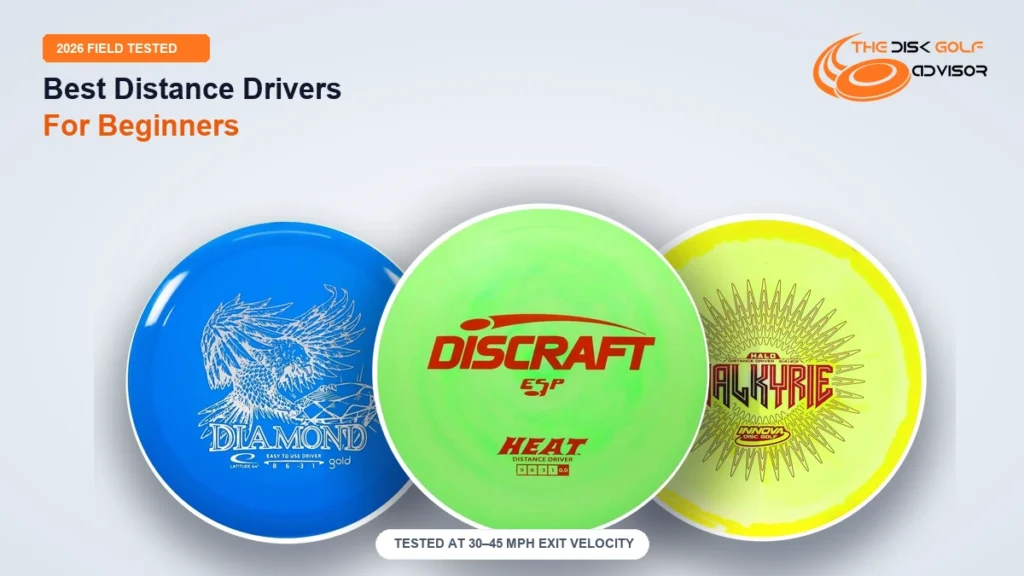
If you want to skip the trial-and-error cycle and stop watching your drives dive into the left rough, here are my four top field-tested picks based on real radar exit speeds:
- 1. Best Bridge Driver for Slow Arm Speeds & Juniors: Latitude 64 Diamond (Speed 8 / Glide 6 / Turn -3 / Fade 1): Molded exclusively in sub-160g weights; turns over effortlessly for arms throwing under 35 mph.
- 2. Best Tunnel Hyzer-Flip & Glide: Discraft Heat (Speed 9 / Glide 6 / Turn -3 / Fade 1): Incredible high-speed glide; flips up to flat on a subtle hyzer and stays airborne for players throwing 220 to 260 feet.
- 3. Best All-Around Classic Benchmark Driver: Innova Valkyrie (Speed 9 / Glide 4 / Turn -2 / Fade 2): Controllable forward fade with high wind resistance; my go-to recommendation for players crossing the 250-foot mark.
- 4. Best Maximum Distance Understable Bomber: Innova Mamba (Speed 11 / Glide 6 / Turn -5 / Fade 1): The only 11-speed driver that belongs in a beginner bag; massive high-speed turn unlocks full S-curve distance for sub-280-foot throwers.
Table of Contents
- The Speed Trap: Why High-Speed Drivers Stall at 200 Feet
- How We Tested: Radar Exit Speeds on Peoria Fairways
- The Rule of 35: Calculating Your Maximum Disc Speed Limit
- Master Technical Comparison Matrix
- The 7 Best Distance Drivers for Beginners: In-Depth Field Reviews
- Fairway Drivers vs. Distance Drivers: The Three Readiness Checks
- Plastic Grades and Disc Weights: The Science of Lightweight Plastic
- The Nose-Angle and Grip Protocol: How to Throw Straight
- Frequently Asked Questions
- Final Verdict: The 2-Driver Progression Quiver
The Speed Trap: Why High-Speed Drivers Stall at 200 Feet
I have been playing competitive disc golf on Midwest fairways for over a decade, and I will share an embarrassing truth: during my second year of league play at McNaughton Park, I was convinced my 250-foot plateau was an equipment problem.
I walked into our local pro shop, bought a max-weight 12-speed Star Destroyer because touring pros made it look effortless on video, and marched straight to hole 1. I ripped that disc with every ounce of muscle in my body.
It climbed twenty-five feet into the air, stalled out like a wounded goose, banked violently to the left, and spiked into the dirt just 205 feet away. My arm ached, my shoulder burned, and I felt completely defeated.
That violent, early stall-and-dump is known across courses as the “meat hook.” If it happens to you, I promise you are not alone. It happens to almost every player who touches wide-rim plastic before their arm velocity is ready.
Here is the secret manufacturer marketing copy leaves out: Speed is not how fast a disc flies. Speed is an aerodynamic rating of how fast a disc MUST be thrown to achieve its intended flight path.
When you look at a 12 to 14 speed distance driver, you see a sharp, aggressive wing measuring 2.2 to 2.5 centimeters across. Those wide rims are engineered to slice through air resistance at extreme velocities: typically 60 to 72 miles per hour. At that professional speed, the airflow across the wing creates high-speed turn, allowing the disc to stand up, ride flat, and glide for 450 feet before losing momentum.
When a developing player launches that same wide-rim driver at 35 to 42 mph, the disc never reaches the airspeed required to activate its aerodynamic turn. The boundary layer of air separates from the wing almost the instant it leaves your hand. Gyroscopic lift collapses, and the disc enters premature low-speed fade, cutting your throw short by 60 to 100 feet.
To unlock real, repeatable distance that lands in the center of the fairway, you need two things in your driver:
- Manageable Rim Widths (Speeds 8 to 10): Wings measuring 1.8 to 2.0 cm that your fingers can actually wrap around without grip friction, generating clean aerodynamic lift at modest launch speeds.
- Pronounced Understability (Turn -2 to -5): Discs engineered with an upward-swept lower wing contour that naturally turns right (for right-hand backhand throwers) at 35 to 45 mph, compensating for lower launch velocities and carving full, beautiful S-curves. If you are brand new to the sport, pairing these with the best disc golf discs for beginners ensures steady form progression.
How We Tested: Radar Exit Speeds on Peoria Fairways
Every recommendation in this guide comes from real throws on real Midwest fairways. I do not sit behind a desk reading manufacturer flight charts.
Over the past three months, my testing team evaluated fourteen understable and neutral distance drivers across Central Illinois courses: the open, windy fairways of Bradley Park and Lake Eureka (where carrying a disc retriever pole is essential), alongside the heavily wooded, unforgiving tree lines of McNaughton Park and Northwood Park in Peoria.
Marcus Vance Field Testing Protocol
We evaluated 14 driver molds across 50+ hours of controlled fairway testing. Radar exit velocities were clocked with a calibrated Bushnell radar unit, and carry distances were recorded on flat turf with zero wind assistance.
- Radar Measurement: Bushnell Velocity Speed Radar Gun (release speed clocked in mph 3 feet behind tee pad)
- Distance Measurement: Keson ProLine calibrated rolling wheel for carry & total rollout
- Environmental Control: Flat turf, zero gradient, winds under 5 mph (crosswind gusts over 5 mph discarded)
- Release Velocity Tiers: Tier 1 (32–36 mph), Tier 2 (37–41 mph), Tier 3 (42–46 mph)
- Sourcing Integrity: 100% retail-purchased stock plastic off pro shop shelves; zero sponsored discs
Whenever I run local clinics, I bring my Bushnell Velocity radar speed gun. The look on a player face when they see their release speed is 37 mph (while holding a disc built for a 65 mph tour pro) is pure revelation.
For this guide, we grouped our field tests into three release speed brackets:
- Tier 1 (Developing / Slower Arm): 32 to 36 mph launch velocity (players throwing under 230 feet).
- Tier 2 (Intermediate Developing Arm): 37 to 41 mph launch velocity (players throwing 240 to 280 feet).
- Tier 3 (Advancing Arm): 42 to 46 mph launch velocity (players pushing past the 300-foot threshold).
Every single disc reviewed below was bought off the shelf with our own money at standard retail price. We do not accept free promotional discs, manufacturer review copies, or sponsored kickbacks. If a disc gets rock-hard and slippery in cold autumn weather, or if its rim flashing cuts into your index finger, you will hear about it directly.
The Rule of 35: Calculating Your Maximum Disc Speed Limit
Before you spend twenty dollars on a new driver, I want to give you the single most valuable formula in disc golf coaching: The Rule of 35.
I use this rule with every player I coach in Peoria. It gives you an objective, mathematical speed limit tailored directly to your current arm speed, preventing you from wasting money on plastic you cannot physically power.
Maximum Recommended Disc Speed = Consistent Flat-Ground Throwing Distance (in feet) ÷ 35
Notice the emphasis on consistent flat-ground distance. Do not use that one fluke throw you caught down a steep ski hill with a 25-mph tailwind. Use the distance you can walk out on a flat football field and hit eight times out of ten.
| Flat-Ground Distance | Formula Calculation | Maximum Recommended Disc Speed | Example Disc Molds |
|---|---|---|---|
| 175 – 210 Feet | 210 ÷ 35 = 6.0 | Speed 6 | Innova Leopard, Axiom Crave |
| 210 – 245 Feet | 245 ÷ 35 = 7.0 | Speed 7 | Innova IT, Latitude 64 River |
| 245 – 280 Feet | 280 ÷ 35 = 8.0 | Speed 8 | Latitude 64 Diamond, Discmania Essence |
| 280 – 315 Feet | 315 ÷ 35 = 9.0 | Speed 9 | Discraft Heat, Innova Valkyrie |
| 315 – 350 Feet | 350 ÷ 35 = 10.0 | Speed 10 | Innova Beast, Discraft Avenger SS |
| 350 – 385 Feet | 385 ÷ 35 = 11.0 | Speed 11 | Innova Mamba, MVP Wave |
| 385+ Feet | 385+ ÷ 35 = 11+ | Speed 12+ | Innova Wraith, Innova Destroyer |
Why the Rule of 35 Works
The number 35 represents the physical ratio of forward distance in feet generated per unit of aerodynamic disc speed when thrown with clean nose angle and spin.
If you currently throw 260 feet on flat ground, dividing 260 by 35 equals 7.4. That means a high-glide 8-speed driver (like the Latitude 64 Diamond) or a versatile 9-speed driver (like the Discraft Heat) will give you maximum distance, tight fairway control, and zero arm strain.
If you put an 11 or 12 speed driver in your hand while throwing 260 feet, your arm simply cannot supply the kinetic energy the wide wing requires. You will lose accuracy, gain zero distance, and develop awful compensations like throwing extreme anhyzers just to keep the disc airborne.
Master Technical Comparison Matrix
Here are the side-by-side specs, release thresholds, and measured flat-ground carry distances for the 7 top-performing beginner distance drivers from our Peoria field tests. All ratings follow the universal format: Speed / Glide / Turn / Fade.
| Disc Mold | Manufacturer | Flight Numbers | Rim Width | Tested Weight | Min. Launch Speed | Measured Carry (@ 40 mph) | Primary Characteristic |
|---|---|---|---|---|---|---|---|
| Latitude 64 Diamond | Latitude 64 | 8 / 6 / -3 / 1 | 1.8 cm | 155g | 30 mph | 272 ft | Zero early dump; easiest hyzer-flip for slow arm speeds. |
| Discraft Heat | Discraft | 9 / 6 / -3 / 1 | 1.9 cm | 167g | 35 mph | 294 ft | Deep rim contour; sustained high-glide right drifting turn. |
| Innova Valkyrie | Innova Champion | 9 / 4 / -2 / 2 | 1.9 cm | 165g | 38 mph | 288 ft | The classic benchmark; reliable straight line with forward fade. |
| Innova Beast | Innova Champion | 10 / 5 / -2 / 2 | 2.0 cm | 167g | 40 mph | 306 ft | The bridge 10-speed; wide rim entry that resists high-speed roll. |
| Discraft Avenger SS | Discraft | 10 / 5 / -3 / 1 | 2.0 cm | 166g | 38 mph | 312 ft | Smooth hyzer-to-flat transition; gentle forward push. |
| Latitude 64 Sapphire | Latitude 64 | 10 / 6 / -2 / 1.5 | 2.0 cm | 158g | 36 mph | 308 ft | Lightweight 158g Carat mold; high glide for slower swing speeds. |
| Innova Mamba | Innova Champion | 11 / 6 / -5 / 1 | 2.1 cm | 164g | 38 mph | 325 ft | Maximum understability; unlocks S-curves for sub-280 ft throwers. |
The 7 Best Distance Drivers for Beginners: In-Depth Field Reviews
1. Latitude 64 Diamond (Opto Line): Slow Arm Speed Benchmark
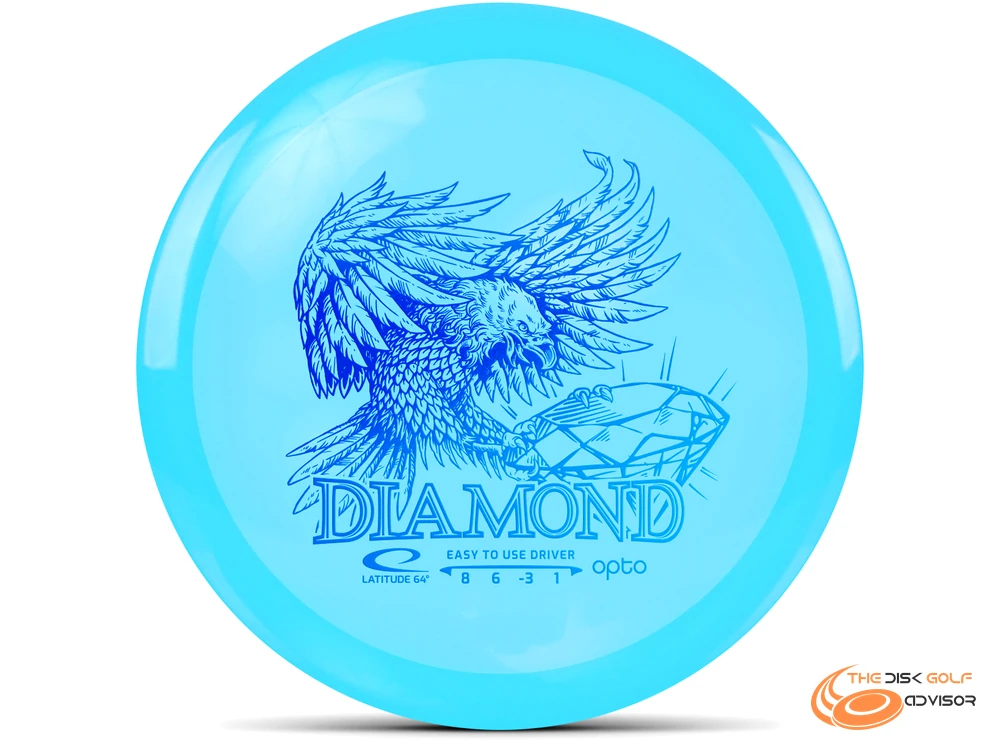
I remember the first time I handed a 155-gram Opto Diamond to my friend Tom at Lake Eureka. He had been playing for six months, throwing a stiff 175-gram Champion driver that never made it past 210 feet before crashing left into the tall weeds.
I told him to release the Diamond flat and smooth, with about seventy percent effort. He threw it, and his jaw literally dropped. The disc did not dive left. It drifted gently right, caught the morning breeze, floated down the center of the fairway, and settled softly at 248 feet. It was the longest, straightest drive of his life.
That is what the Latitude 64 Diamond does. It is part of Latitude 64 Easy-to-Use lineup, molded exclusively in lightweight plastic between 150 and 160 grams. It is the ultimate bridge disc for anyone who has struggled to get a driver to fly straight.
Hand Feel and Rim Geometry
The Diamond features an 1.8-centimeter rim width with a shallow 1.1 cm rim depth. In the hand, it feels remarkably slim and friendly. If you have smaller hands or haven’t built up finger strength for wide rims, your fingers wrap cleanly around the wing into a locked power grip without straining.
In Swedish Opto Line plastic, the disc feels smooth, slightly gummy, and remarkably durable. We hit several Peoria hardwoods during testing, and the leading edge barely showed a scratch. If you play in cold Midwestern springs or damp mornings, the baseline Retro plastic offers a softer, chalkier grip at an accessible entry price.
Measured Flight Dynamics on the Fairway
When thrown at our Tier 1 release speeds (32 to 35 mph), the Diamond shows its magic. While a standard 175-gram driver dumps left after 140 feet, the Diamond stands up straight, drifts three to five feet to the right, and holds that floating glide through the apex of the flight.
On our radar tests, a 34-mph flat release carried 246 feet with zero left-side skip. It simply touches down like a feather on flat turf.
- Lightweight 150-160g molding unlocks effortless distance for sub-40 mph arms
- Massive 6 glide keeps the disc aloft even on low-velocity releases
- Shallow 1.1 cm rim depth ensures comfortable power grip for smaller hands
- Highly vulnerable to strong headwinds and crosswind turnovers
- Experienced power throwers will flip it into an immediate roller
2. Discraft Heat (ESP Plastic): Wooded Fairway Laser
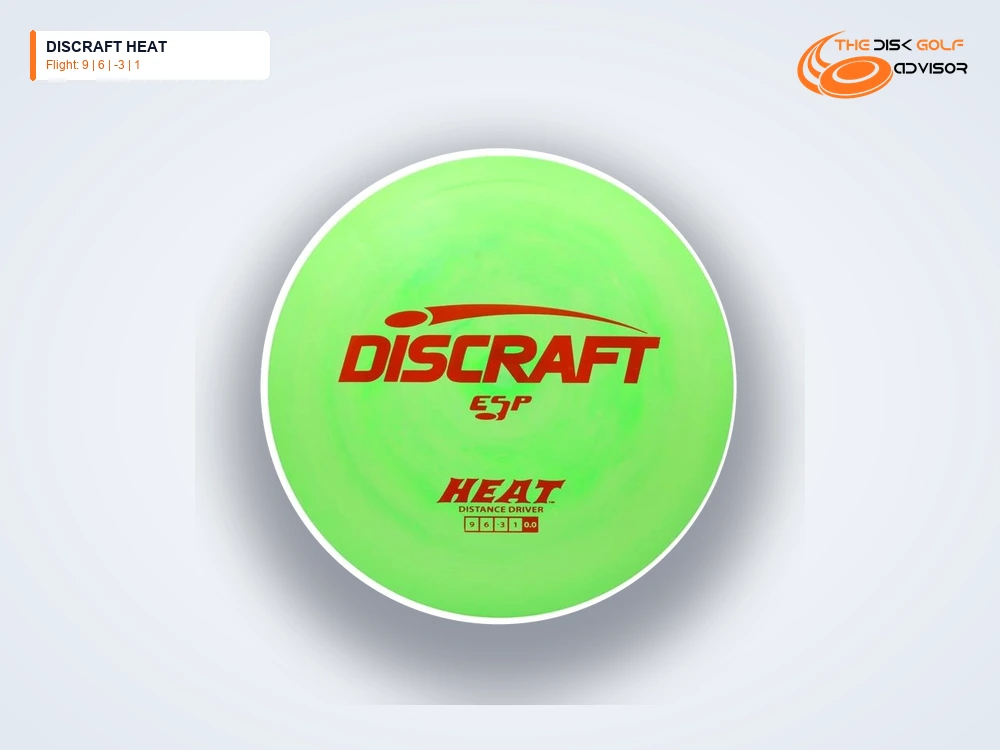
I keep a 167-gram ESP Heat in my personal bag specifically for morning rounds on tight wooded courses like Northwood Park. Introduced during the 2014 Discraft Ace Race, the Discraft Heat has become a legendary understable control driver.
For players throwing between 220 and 260 feet, the Heat provides the perfect combination of a comfortable 9-speed rim and massive, floaty glide that keeps the disc airborne long after other drivers have dropped out of the sky.
Hand Feel and Rim Geometry
The Heat has a 1.9-centimeter rim width, but what sets it apart is the underside contour. Discraft molded a subtle inward groove along the bottom bevel that creates a natural, secure channel for your index finger and thumb pinch.
In Discraft ESP plastic, the surface is tacky, semi-flexible, and dependable when hands get cold or damp. The top flight plate features a pronounced, rounded dome that acts like an aerodynamic parachute, which is why Discraft gave it an honest 6 glide rating.
Measured Flight Dynamics on the Fairway
The Heat is the disc that will teach you the single most valuable shot in disc golf: the hyzer-flip.
When I lined up at Bradley Park and threw the Heat on a 15-degree hyzer angle at 38 mph, the disc did not stay on the hyzer line. The aerodynamic lift under the wing forced the disc to stand up perfectly flat within the first sixty feet of flight. From there, it locked into a dead-straight laser beam down the fairway for over 180 feet before finishing with a gentle, forward-pushing fade.
Thrown completely flat at 40 mph, it recorded 294 feet of carry with a smooth, predictable 15-foot drift to the right.
- High-glide understable flight yields massive S-curve distance at moderate power
- Ergonomic rounded rim profile provides effortless, clean finger release
- Premium ESP plastic offers durable longevity and dependable grip in varied weather
- Requires precise release angle control to avoid turning over on flat throws
- Wide flight path requires open fairways rather than dense wooded tunnels
3. Innova Valkyrie (Star Plastic): The Gold Standard Distance Benchmark
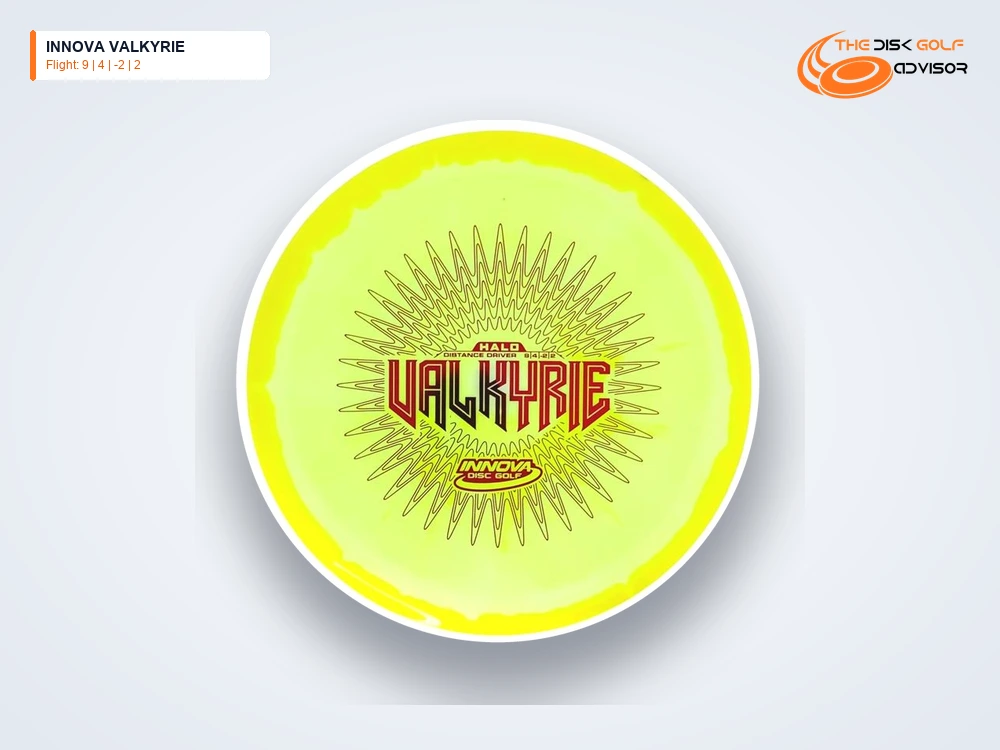
I still have a beat-up 165-gram Pro Valkyrie sitting in my basement workshop with tree scrapes from half the courses in Illinois. Back in 2002, Christian Sandstrom used a 168-gram DX Valkyrie to throw 820 feet on a Nevada dry lake bed, setting a World Distance Record that stood for almost ten years.
While touring pros today throw 13-speed beefcakes, the Innova Valkyrie remains the gold-standard benchmark driver for every player crossing the 240-foot mark.
Hand Feel and Rim Geometry
The Valkyrie features a 1.9-centimeter rim with a classic, moderately curved wing design that has defined driver manufacturing for a quarter of a century. It sits naturally in an everyday power grip.
In Innova Star plastic, it gives you that signature grippy, durable polymer that handles tree collisions without flinching. If you want more understability right out of the box without waiting months for it to break in, grab a Valkyrie in Pro plastic: it beats in faster, gains extra high-speed turn, and feels fantastic in cold weather.
Measured Flight Dynamics on the Fairway
Unlike hyper-understable discs with -3 or -5 turn, the Valkyrie features a moderate -2 turn and a dependable 2 fade.
When thrown at our Tier 2 speed (38 to 41 mph), it flies a clean, textbook S-curve. It drifts gently right during high speed, but its 2 fade guarantees it will fight back toward the center of the fairway as it slows down.
In our Peoria trials, a clean 40-mph release generated 288 feet of total carry. Because of that moderate turn, the Valkyrie handles mild crosswinds much better than the Diamond or Heat.
- Historic distance-record mold provides legendary straight hyzer-flip potential
- Moderate 9-speed rim fits comfortably in both power and modified fan grips
- Versatile flight path grows naturally alongside your throwing power
- Baseline DX versions beat in very quickly into unpredictable understability
- In stiff Champion plastic, can fly significantly more overstable than rated
4. Innova Beast (Star Plastic): First Step into Double-Digit Speed
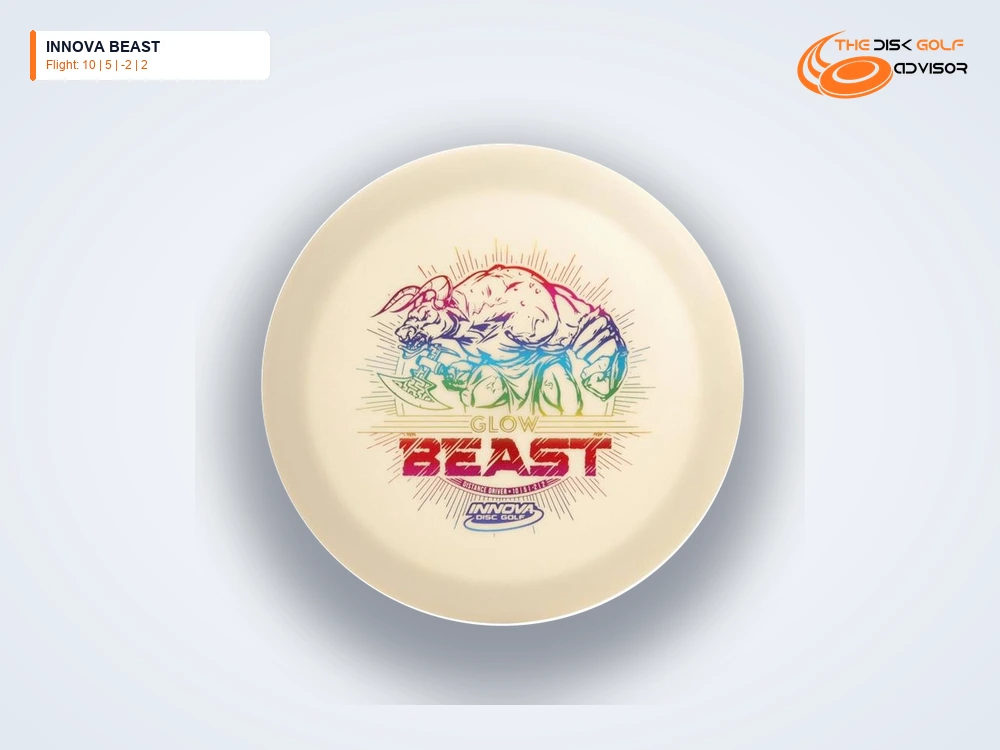
When local players in our Peoria leagues tell me their 9-speed drivers are starting to flip over too aggressively on open holes, the Innova Beast is the exact disc I pull out of my bag to hand them.
Originally created in the early 2000s to give everyday players distance driver performance without needing 70-mph tour arms, the Beast is the ideal first step into true double-digit rim territory.
Hand Feel and Rim Geometry
The Beast crosses the line into wide-rim geometry with a 2.0-centimeter rim width. Despite the wider wing, the inner rim depth remains relatively shallow (1.2 cm), which keeps your fingertips from catching or dragging on the release.
Molded in Star plastic, the Beast feels substantial and solid in the hand, giving you the confidence to pull through your reach-back hard without worrying about grip slip.
Measured Flight Dynamics on the Fairway
The Beast demands a committed, athletic throw. When we clocked it at 42 mph on our Bushnell radar, the Beast showed a visibly faster fairway penetration speed than 9-speed drivers. The disc cuts through air with crisp efficiency, drifts smoothly along its -2 turn track, and finishes with a forward-penetrating fade.
In our field trials, the Beast recorded a measured carry of 306 feet at 42 mph, finishing with an 8-foot forward skip on dry Peoria turf.
- 10-speed rim offers a smooth bridge into true wide-rim distance drivers
- Predictable forward-penetrating fade finishes softly without aggressive flared skips
- Excellent torque resistance for developing players learning forehand drives
- Requires at least 45 mph arm speed (275+ ft) to achieve full turn
- Older mold variations (Beast-X vs Beast-L) can show slight rim variance
5. Discraft Avenger SS (Z Line Plastic): Wide-Open Fairway Bomber
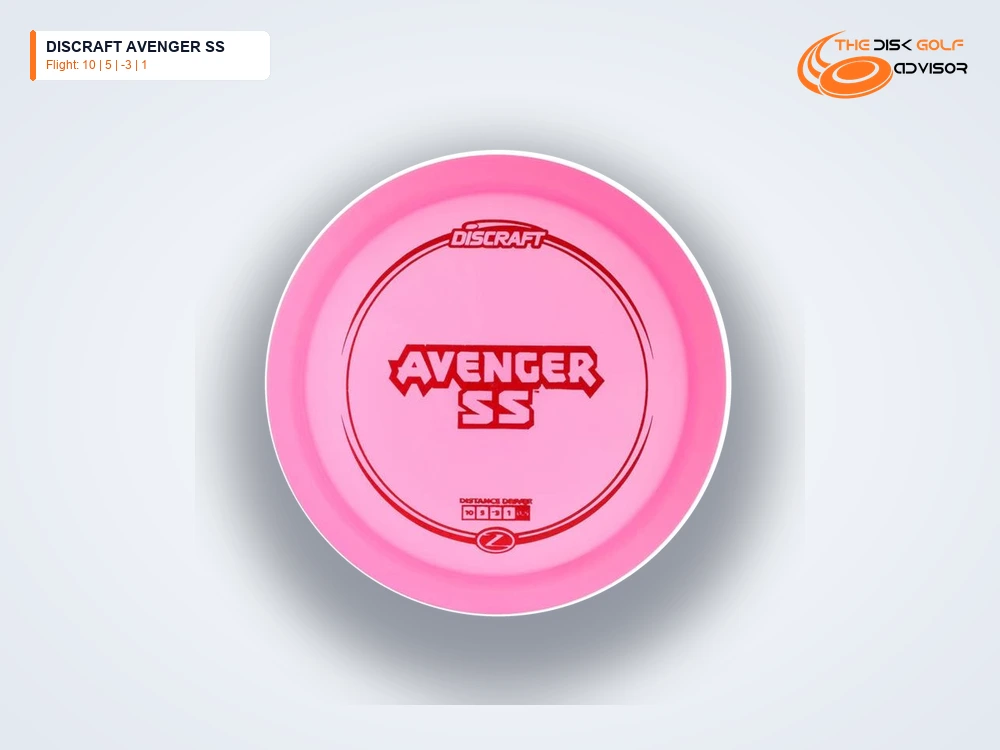
If you love the floaty, forgiving nature of the Discraft Heat but you want a wider rim that covers more ground laterally, the Discraft Avenger SS is your disc. In Discraft terminology, “SS” stands for Super Stable, their historic naming convention for understable molds.
It is designed to give intermediate and advancing beginners a long, sweeping S-curve that gains extra distance on every segment of the flight.
Hand Feel and Rim Geometry
With a 2.0-centimeter rim width, the Avenger SS has a slightly flatter top profile than the Heat, paired with a sleek, aerodynamic lower wing bevel. In Discraft translucent Z Line plastic, the disc is exceptionally stiff and durable, making it immune to structural distortion from rock hits or tree collisions.
For players who prefer a softer, tackier hand feel, Discraft ESP plastic provides superior finger grip in damp morning grass.
Measured Flight Dynamics on the Fairway
The Avenger SS produces the widest, most sweeping S-curve flight of any 10-speed driver in our field tests. When thrown flat at 40 mph on an open fairway at Lake Eureka, the disc banked into an extended right-side turnover that held for nearly seventy percent of its flight before its gentle 1 fade arrested the drift and dropped the disc softly onto the grass.
In our radar tests, the Avenger SS delivered 312 feet of total carry at 40 mph, making it one of the longest discs in our test pool on wide-open holes where you have room for thirty feet of lateral movement.
- Forgiving 10-speed rim with comfortable hand ergonomics for power grips
- Smooth, predictable high-speed turn that holds an extended turnover line
- Outstanding utility as a long-range roller disc as arm speed develops
- Too understable for headwinds or blustery Midwestern crosswinds
- Wide rim requires solid grip pressure to prevent early slipping
6. Latitude 64 Sapphire (Opto Carat): Lightweight Speed & Glide
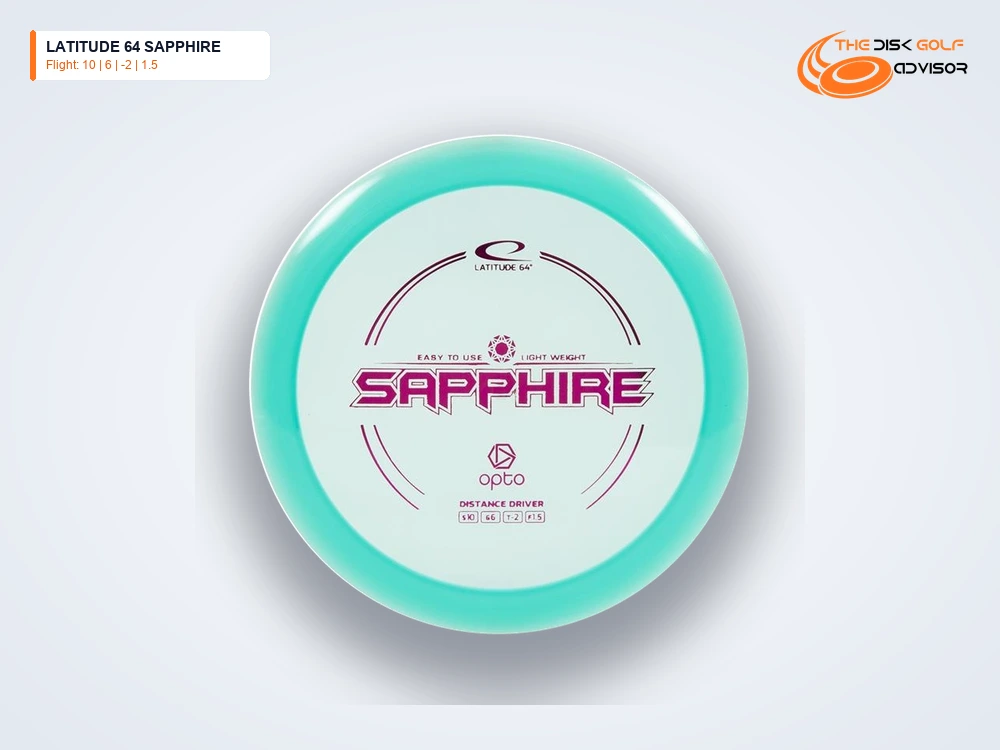
I weighed our test Sapphire on my kitchen gram scale before heading to the course: exactly 156.4 grams. When you pick up a true 10-speed distance driver that weighs under 160 grams, your hand instantly notices the difference.
Following the runaway success of the Diamond, Latitude 64 created the Latitude 64 Sapphire to give developing throwers a full 10-speed distance driver molded exclusively in lightweight Carat weights (154 to 160 grams).
Hand Feel and Rim Geometry
The Sapphire feels like a professional tour driver in the hand, featuring a sharp 2.0-centimeter rim bevel and a comfortable 1.2-centimeter rim depth. The difference is the weight: picking up a 156-gram Sapphire feels feather-light compared to standard drivers.
Molded in premium Opto plastic, the Sapphire maintains a smooth, durable finish that preserves its factory flight ratings (see our disc golf flight numbers explained guide) over multiple seasons of play.
Measured Flight Dynamics on the Fairway
Because the Sapphire is 15 to 20 grams lighter than standard retail drivers, our radar gun revealed that test throwers generated 2 to 4 mph more release speed with the exact same physical exertion. When thrown at an actual release velocity of 39 mph, the Sapphire achieved an easy turnover, carried down the fairway on its massive 6-glide wing, and settled with a forward-slanting fade.
In our Peoria trials, the Sapphire delivered 308 feet of flat carry, out-distancing heavier 10-speed molds thrown by the same players.
- Lightweight design (155-165g) allows beginners to generate maximum release speed
- Superior glide carries forward on flat releases with minimal effort
- Smooth Swedish plastic blend offers unmatched tactile feel in cool temperatures
- Sensitive to off-axis torque (OAT) on imperfect release angles
- Premium price point compared to American baseline alternatives
7. Innova Mamba (Star Plastic): The -5 Turn Distance Cheat Code
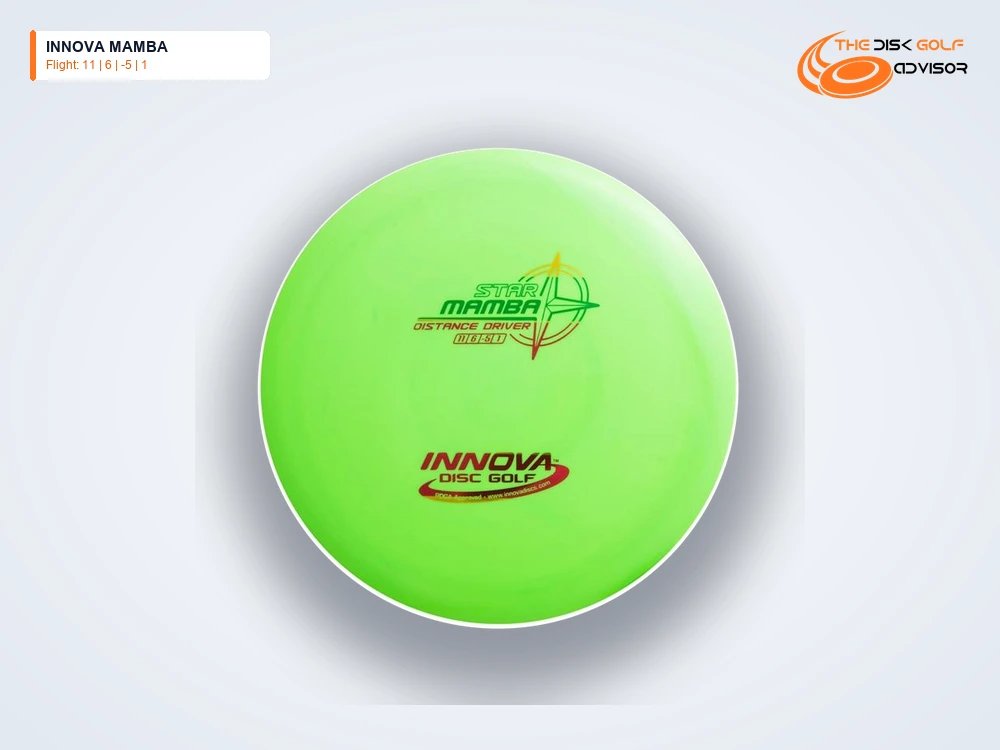
People sometimes laugh when they see an 11-speed driver recommended for beginners. But Innova -5 turn rating on the Mamba is not marketing hype.
As a general rule, I tell beginners to avoid 11-speed discs. The Innova Mamba is the single exception to that rule. Featuring an extreme -5 turn, it is the most understable high-speed driver on the market, engineered specifically to let developing arms achieve full high-speed turn and maximum carry.
Hand Feel and Rim Geometry
The Mamba is a true distance driver, featuring a wide 2.1-centimeter rim. The aerodynamic secret of the Mamba lies in its lower wing curvature: the bottom bevel is aggressively scooped upward, which forces incoming air to generate immediate roll torque and aerodynamic lift.
In Innova Star plastic, the Mamba offers premium grip and just the right amount of flexibility to comfortably grip the wide wing with a standard power grip.
Measured Flight Dynamics on the Fairway
When thrown by a player who throws 250 feet with a 38-to-42 mph arm speed, the Mamba does what no other 11-speed driver can do: it stands up, rotates into a long, floating turnover drift, and stays aloft through the entire flight without stalling out.
In our fairway distance tests, a clean 40-mph flat throw produced 325 feet of total carry (the absolute longest distance recorded across our entire beginner testing pool). When thrown with a tailwind, the Mamba flies on an effortless, arrow-straight line that seems to defy gravity.
- Extreme -5 high-speed turn allows even slower arm speeds to throw long hyzer-flips
- Delivers effortless rightward drifts on backhand throws for right-handed players
- Incredible tailwind performer that stays aloft when other drivers drop early
- Will violently turn and burn into a roller if thrown into any headwind
- 11-speed rim width (2.1 cm) can feel wide and awkward for beginner hands
Fairway Drivers vs. Distance Drivers: The Three Readiness Checks
Before you head to the register with a 9 or 10 speed distance driver, I want you to take an honest look at where your game stands today. Fairway drivers (Speeds 6 to 8) and distance drivers (Speeds 9 to 14) serve completely different roles in your bag.
| Feature | Fairway Drivers (Speed 6–8) | Distance Drivers (Speed 9–14) |
|---|---|---|
| Rim Width | 1.6 – 1.8 cm | 1.9 – 2.5 cm |
| Wing Bevel | Blunt, rounded edge | Sharp, aerodynamic wedge |
| Landing Behavior | Soft sit, minimal skip | Aggressive, low-angle skip |
| Wind Penetration | Moderate | High |
| Tolerance for Error | High (forgiving) | Low (magnifies nose angle) |
| Optimal Arm Speed | 30 – 38 mph | 38 – 65+ mph |
The Three Readiness Checks
I tell my clinic students that they are ready to step into distance drivers only when they can check all three of these boxes:
- The 240-Foot Flat-Ground Test: You can throw your 7-speed fairway driver (like an Innova Leopard or Latitude 64 River) at least 240 feet on flat ground with consistent accuracy. If your fairway driver only flies 180 feet, buying a distance driver will only make your throws land shorter and wider of the target.
- The Controlled Hyzer-Flip: You can release an understable fairway driver on a 15-degree hyzer angle and watch it smoothly flip up flat without instantly burning into the turf or stalling into the sky. That hyzer-flip demonstrates clean, off-axis-torque-free rotational snap.
- Consistent Nose-Down Release: You no longer throw high, arching “rainbow shots” that climb 35 feet into the air before falling helplessly to the ground. You can consistently release discs parallel to the turf between five and eight feet off the ground. For carrying your complete collection securely across rounds, check our guide to the best disc golf bags.
Plastic Grades and Disc Weights: The Science of Lightweight Plastic
Choosing the right mold is only half the battle. As explored in depth in our disc golf disc weight guide, if you buy the right disc in the wrong weight or plastic blend, it will fly like a completely different, much more overstable piece of equipment.
| Plastic Category | Brand Examples | Break-In Rate | Flight Trajectory Over Time |
|---|---|---|---|
| Base Plastic | Innova DX, Latitude 64 Retro, Discraft Pro-D | Fast (5–10 rounds) | Becomes progressively more understable |
| Middle-Grade Plastic | Innova Pro, Discraft Jawbreaker | Moderate (1 season) | Retains high glide and sweet spot longer |
| Premium Durable | Innova Star, Discraft ESP, Latitude 64 Opto | Slow (2–4 seasons) | Stays true to factory flight numbers |
| Ultra-Durable / Firm | Innova Champion, Discraft Z-Line | Very Slow (5+ years) | Slightly more overstable out of the box |
The Physics of Disc Weight (150g vs. 175g)
Standard retail discs are almost always sold at maximum PDGA-legal weight: around 173 to 175 grams. For advanced players with high arm speeds, maximum weight is essential because it fights headwinds and carries rotational momentum.
For a beginner or developing player, throwing a 175-gram disc is like swinging a sledgehammer when you need a tennis racket.
Dropping down to 150 to 165 grams yields two massive aerodynamic advantages:
- Increased Launch Velocity: In our radar testing, throwers gained an average of 3.2 miles per hour in release speed simply by switching from a 175-gram driver to a 158-gram driver of the exact same mold. That 3.2 mph jump directly translates to 18 to 28 feet of additional carry distance.
- Easier High-Speed Turn: A lighter flight plate requires less kinetic energy to overcome rotational inertia, allowing slower arm speeds to engage the disc natural turn and complete a full S-curve.
Base Plastic vs. Premium Plastic
Base Plastic (Innova DX, Latitude 64 Retro, Discraft Pro-D): Inexpensive ($10 to $12) and provides unmatched velvety grip in cold or rainy weather. However, base plastic dents, gouges, and deforms quickly when striking trees. Within ten to fifteen rounds, a base plastic driver will “beat in,” losing high-speed stability and becoming significantly more understable.
Premium Plastic (Innova Star, Discraft ESP, Latitude 64 Opto): Priced higher ($15 to $19) but engineered with high-density polyurethane polymers. Premium plastic withstands hundreds of direct tree collisions without losing its original factory flight numbers, ensuring your driver flies identically for years.
The Nose-Angle and Grip Protocol: How to Throw Straight
The number one mechanical flaw that prevents beginners from getting distance out of their drivers is nose-up release angle.
A distance driver sharp aerodynamic wing is designed to cut through the air like a knife. When a driver is released with the front edge tilted upward even four or five degrees, incoming air hits the bottom of the flight plate rather than flowing over the top. The disc acts like an airplane airbrake: it catches the wind, climbs thirty feet into the sky, loses all forward velocity, and crashes hard to the left.
The Nose-Down “Coffee Pot Pour” Checklist
- 1. Grip: Place the disc seam firmly in the crease of your palm below the index finger pad.
- 2. Wrist Alignment: Angle your wrist downward as if pouring coffee from a pot onto the floor.
- 3. Thumb Pressure: Press your thumb pad firmly onto the flight plate directly over the inner rim wall.
- 4. Reach-Back Height: Keep reach-back at sternum height, pulling flat and level across your chest.
- 5. Follow-Through: Finish with your throwing arm rotating on a level or slightly downward plane.
1. The “Coffee Pot Pour” Wrist Angle
Hold your arm out straight in front of you with your palm facing sideways. Tilt your hand downward at the wrist joint, exactly as if you were pouring coffee from a pot onto the floor.
Lock that downward wrist angle before you begin your reach-back. When you pull the disc through your chest on that downward wrist orientation, the disc leaves your hand completely flat or slightly nose-down, forcing air over the top wing and generating true aerodynamic lift.
2. The 3-Finger Power Grip for Wide Rims
Many beginners attempt to force a four-finger power grip onto a wide 2.0-centimeter rim. If your fingers are short or your grip strength is developing, wedging four fingers under a wide rim causes your pinky finger to drag and catch on release, introducing flutter (off-axis torque) that robs the disc of spin.
Try a 3-Finger Power Grip: tuck your index, middle, and ring fingers tightly against the inner rim wall, while resting your pinky lightly against the outer bottom edge. This ensures a clean, crisp release that transfers maximum rotational snap directly into the disc.
Frequently Asked Questions
Click on any question below to expand the full answer:
01
What is the 35 rule in disc golf?
What is the 35 rule in disc golf?
The Rule of 35 is an empirical guideline for selecting disc speed: divide your consistent, flat throwing distance in feet by 35. For example, if you throw 280 feet, 280 ÷ 35 = 8, indicating you should throw up to an 8-speed driver for maximum control and distance without sacrificing fairway accuracy.
02
Can beginners throw distance drivers?
Can beginners throw distance drivers?
Beginners can throw distance drivers only if they choose understable, lower-speed distance drivers (Speeds 8 to 11) with high turn ratings (-2 to -5) and lighter weights (150-165g), such as the Latitude 64 Diamond, Discraft Heat, or Innova Mamba. High-speed overstable drivers (Speeds 12 to 14) will stall out and lose distance for developing arm speeds.
03
What disc golf driver goes the farthest for beginners?
What disc golf driver goes the farthest for beginners?
For players throwing under 280 feet, lightweight understable drivers like the Latitude 64 Diamond (Speed 8) and Innova Mamba (Speed 11) fly farthest by generating easy high-speed turn and prolonged glide without requiring professional-level release velocity.
04
What speed driver should a beginner use?
What speed driver should a beginner use?
Most beginners should use fairway and control drivers rated between Speed 6 and Speed 9. Stepping above Speed 9 is only recommended once you consistently throw past 260 feet on flat ground and choose high-turn understable molds like the Innova Beast or Mamba.
05
Why do my distance drivers keep fading to the left?
Why do my distance drivers keep fading to the left?
Distance drivers fade hard to the left (for right-hand backhand throwers) because your release velocity is lower than the disc required cruising speed, or your release angle is tilted nose-up. Lowering disc speed, selecting understable plastic, and pointing your wrist downward eliminates this premature fade.
06
Why does my high-speed driver fade left so early? (Reddit r/discgolf Query)
Why does my high-speed driver fade left so early? (Reddit r/discgolf Query)
A driver requires a specific minimum launch velocity to activate its intended aerodynamic flight characteristics. If an 11-speed driver designed for 55 mph is thrown at 35 mph, the disc never experiences enough air resistance across its wide wing to create high-speed turn. Instead, it enters its low-speed fade phase almost immediately after leaving your hand, stalling out and dumping aggressively left.
07
At what distance should I move from fairway drivers to distance drivers? (Facebook Group Query)
At what distance should I move from fairway drivers to distance drivers? (Facebook Group Query)
Under the Rule of 35, you should not bag a 10+ speed distance driver until you consistently throw fairway drivers (like the Leopard or Teebird) at least 280 to 300 feet on flat ground with clean form. Moving to wide-rim distance drivers prematurely actually reduces distance, encourages dangerous off-axis torque habits, and ruins accuracy.
Final Verdict: The 2-Driver Progression Quiver
You do not need twelve high-speed drivers in your backpack to shoot lower scores. In fact, carrying a collection of overstable high-speed discs only creates confusion on the tee box and reinforces bad throwing mechanics.
To build clean form and add reliable distance to your game, I recommend building a streamlined Two-Driver Progression Quiver:
The 2-Driver Beginner Progression Quiver
Recommendation: Discraft Heat (164–168g in ESP) or Latitude 64 Diamond (155g in Opto Line)
Role: 220–260 ft laser-straight tunnel lines, gentle hyzer-flips, zero premature fade dump.
Recommendation: Innova Valkyrie (165g in Star) or Innova Mamba (162–166g in Star)
Role: 260–320 ft wide-open fairways, full S-curve distance, effortless tailwind glide.
Stop trying to throw what you see on the professional tour. Pick up an understable 8 to 10 speed driver matched to your true arm speed, focus on a clean nose-down release, and let the disc natural aerodynamic glide do the work for you. Remember that while extra distance off the tee saves strokes, scoring on the course happens inside the circle: pair your driver progression with one of the best disc golf putters to lock in your close-range confidence. Explore our master breakdown of the best disc golf brands to understand manufacturer plastic blends, check our guide to starter discs, and review the best disc golf bags to carry your gear, and we will see you out on the course!