
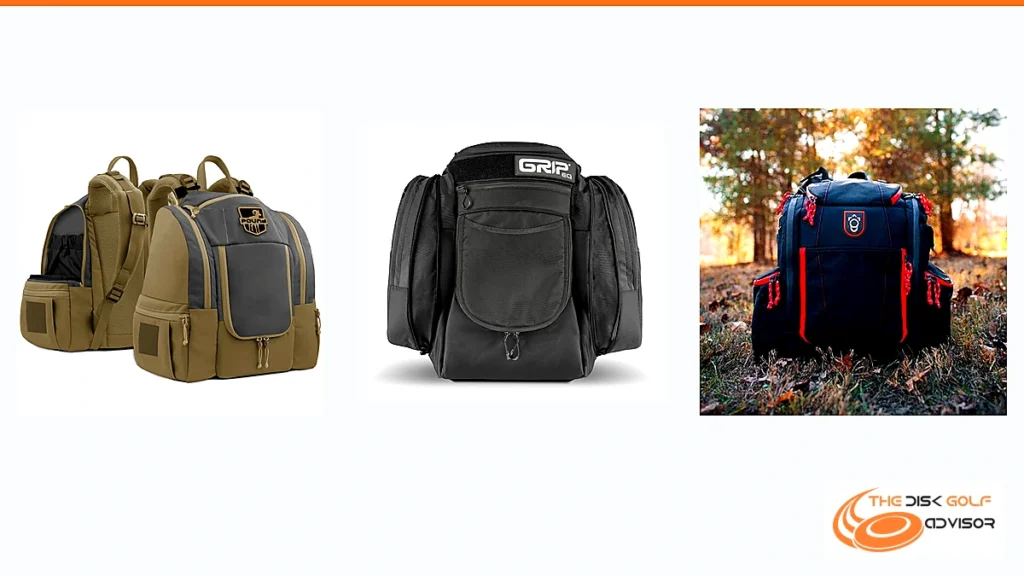
{
“@context”: “https://schema.org”,
“@graph”: [
{
“@type”: “BlogPosting”,
“@id”: “https://thediskgolfadvisor.com/best-disc-golf-bags/#article”,
“isPartOf”: {
“@type”: “WebPage”,
“@id”: “https://thediskgolfadvisor.com/best-disc-golf-bags/#webpage”,
“url”: “https://thediskgolfadvisor.com/best-disc-golf-bags/”,
“name”: “Best Disc Golf Bags: A Local Pro’s Field-Tested Guide”
},
“headline”: “Best Disc Golf Bags: A Local Pro’s Field-Tested Guide”,
“description”: “Discover the best disc golf bags tested on Midwest hills. From budget starters to luxury tour packs, compare capacity, durability, and hill stability.”,
“url”: “https://thediskgolfadvisor.com/best-disc-golf-bags/”,
“mainEntityOfPage”: “https://thediskgolfadvisor.com/best-disc-golf-bags/”,
“datePublished”: “2026-10-21T19:50:00+00:00”,
“dateModified”: “2026-10-21T19:50:00+00:00”,
“wordCount”: 9534,
“articleSection”: “Backpack Bags, Bags & Carts”,
“inLanguage”: “en-US”,
“image”: {
“@type”: “ImageObject”,
“url”: “https://thediskgolfadvisor.com/wp-content/uploads/2026/10/best-disc-golf-bags-field-guide.webp”,
“width”: 1200,
“height”: 800,
“caption”: “Best Disc Golf Bags Field-Tested Guide on Midwest fairways”
},
“author”: {
“@type”: “Person”,
“@id”: “https://thediskgolfadvisor.com/author/marcus-vance/”,
“name”: “Marcus Vance”,
“jobTitle”: “Founder & Lead Equipment Tester”,
“description”: “Local Peoria, IL professional disc golfer with 10+ years of tournament competition testing retail-bought gear on Midwest fairways.”,
“url”: “https://thediskgolfadvisor.com/about/”,
“image”: “https://thediskgolfadvisor.com/wp-content/uploads/2026/10/marcus-vance-pro.jpg?v=2”
},
“publisher”: {
“@type”: “Organization”,
“@id”: “https://thediskgolfadvisor.com/#organization”,
“name”: “The Disc Golf Advisor”,
“url”: “https://thediskgolfadvisor.com/”,
“logo”: {
“@type”: “ImageObject”,
“url”: “https://thediskgolfadvisor.com/wp-content/uploads/2026/10/logo-header-150×150.png”,
“width”: 150,
“height”: 150
}
}
},
{
“@type”: “BreadcrumbList”,
“@id”: “https://thediskgolfadvisor.com/best-disc-golf-bags/#breadcrumb”,
“itemListElement”: [
{
“@type”: “ListItem”,
“position”: 1,
“name”: “Home”,
“item”: “https://thediskgolfadvisor.com/”
},
{
“@type”: “ListItem”,
“position”: 2,
“name”: “Bags & Carts”,
“item”: “https://thediskgolfadvisor.com/category/bags-carts/”
},
{
“@type”: “ListItem”,
“position”: 3,
“name”: “Backpack Bags”,
“item”: “https://thediskgolfadvisor.com/category/bags-carts/backpack-bags/”
},
{
“@type”: “ListItem”,
“position”: 4,
“name”: “Best Disc Golf Bags”,
“item”: “https://thediskgolfadvisor.com/best-disc-golf-bags/”
}
]
},
{
“@type”: “ItemList”,
“@id”: “https://thediskgolfadvisor.com/best-disc-golf-bags/#itemlist”,
“name”: “The 7 Best Disc Golf Bags: In-Depth Field Reviews”,
“itemListOrder”: “https://schema.org/ItemListOrderAscending”,
“numberOfItems”: 7,
“itemListElement”: [
{
“@type”: “ListItem”,
“position”: 1,
“name”: “Pound Rufus / Octothorpe”,
“url”: “https://thediskgolfadvisor.com/best-disc-golf-bags/#pound-rufus”
},
{
“@type”: “ListItem”,
“position”: 2,
“name”: “GRIPeq AX6”,
“url”: “https://thediskgolfadvisor.com/best-disc-golf-bags/#gripeq-ax6”
},
{
“@type”: “ListItem”,
“position”: 3,
“name”: “Squatch The Legend 3.0”,
“url”: “https://thediskgolfadvisor.com/best-disc-golf-bags/#squatch-legend”
},
{
“@type”: “ListItem”,
“position”: 4,
“name”: “Prodigy BP-1 V3”,
“url”: “https://thediskgolfadvisor.com/best-disc-golf-bags/#prodigy-bp1”
},
{
“@type”: “ListItem”,
“position”: 5,
“name”: “MVP Voyager Lite”,
“url”: “https://thediskgolfadvisor.com/best-disc-golf-bags/#mvp-voyager”
},
{
“@type”: “ListItem”,
“position”: 6,
“name”: “Dynamic Discs Trooper”,
“url”: “https://thediskgolfadvisor.com/best-disc-golf-bags/#dd-trooper”
},
{
“@type”: “ListItem”,
“position”: 7,
“name”: “Rogue Iron V3 Cooler Bag”,
“url”: “https://thediskgolfadvisor.com/best-disc-golf-bags/#rogue-iron”
}
]
},
{
“@type”: “FAQPage”,
“@id”: “https://thediskgolfadvisor.com/best-disc-golf-bags/#faq”,
“mainEntity”: [
{
“@type”: “Question”,
“name”: “What disc golf bags do top touring pros carry?”,
“acceptedAnswer”: {
“@type”: “Answer”,
“text”: “Top touring professionals on the Disc Golf Pro Tour carry three dominant brands: Pound Disc Golf (Octothorpe and Rufus), GRIPeq (AX-Series and BX-Series), and Squatch (The Legend 3.0). Pros select these bags for their 1000D Cordura durability, internal frame stability that prevents tip-overs on steep tour fairways, and dense lumbar padding that reduces muscular fatigue across grueling 4-day tournaments.”
}
},
{
“@type”: “Question”,
“name”: “What bag setup does Paul McBeth use on tour?”,
“acceptedAnswer”: {
“@type”: “Answer”,
“text”: “Six-time PDGA World Champion Paul McBeth throws out of his signature GRIPeq BX3 and AX-Series tour bags. Built to McBeth’s exact specifications, these bags feature reinforced internal side panels, an expandable 22-to-26 disc capacity, dual umbrella sleeves, and custom McBeth aesthetic badging.”
}
},
{
“@type”: “Question”,
“name”: “Which disc golf bag does Ezra Aderhold carry?”,
“acceptedAnswer”: {
“@type”: “Answer”,
“text”: “Powerhouse touring pro Ezra Aderhold is sponsored by Squatch Disc Golf and carries The Legend 3.0. Aderhold relies on the bag’s lightweight Cordura construction, custom slide-in cooler compartment for on-course nutrition, and ergonomic shoulder suspension designed in collaboration with Pound.”
}
},
{
“@type”: “Question”,
“name”: “How many discs should a player carry based on skill level?”,
“acceptedAnswer”: {
“@type”: “Answer”,
“text”: “A casual or recreational player needs a bag holding 12 to 16 discs (a balanced mix of putters, straight midranges, and control fairways). Tournament and serious league competitors carry 20 to 26 discs to accommodate duplicate backup molds in varying stages of wear, utility scramble discs for severe wind and doglegs, plus essential rain gear, hydration, and towels.”
}
},
{
“@type”: “Question”,
“name”: “How do you properly wash and maintain a premium disc golf bag?”,
“acceptedAnswer”: {
“@type”: “Answer”,
“text”: “Never submerge a high-end disc golf backpack in a washing machine; the spin cycle destroys internal plastic stiffeners and strips waterproof polyurethane coatings. Empty all pockets and shake out debris. Mix lukewarm water with mild Dawn dish soap, scrub bottom rails and Cordura fabric with a soft nylon brush, rinse gently with a hose, and hang upside down in a shaded, well-ventilated area to air dry.”
}
},
{
“@type”: “Question”,
“name”: “What causes disc golf bags to tip over on hillsides?”,
“acceptedAnswer”: {
“@type”: “Answer”,
“text”: “Bags tip over due to three factors: lack of rigid base runners or cleats, high centers of gravity from overloaded top putter pockets, and frameless sidewalls that collapse when discs shift downhill. Premium bags solve this using elevated polyethylene runner rails (like GRIPeq) or rigid internal composite frames that stay upright on steep slopes.”
}
}
]
}
]
}

At a Glance: The 4-Tier Quick Action Box
A reliable disc golf bag has to survive steep ravines, unexpected downpours, and hundreds of teepad drops without dumping your discs across the mud. After weighing tournament capacity against real hillside stability on Midwest courses, these four backpacks earned top honors in our field evaluations:
- 1. Best Luxury & Lifetime Durability: Pound Rufus / Octothorpe ($349-$449): Custom Cordura build, handmade in the USA, lifetime warranty, zero lumbar sag.
- 2. Best Tournament Touring Standard: GRIPeq AX6 ($219): Massive 24+ disc capacity, rigid internal skeleton, dedicated retriever sleeves, unmatched build structure.
- 3. Best Value Heavy-Duty Under $130: Prodigy BP-1 V3 ($125): Carries up to 26 discs, ripstop water-resistant fabric, magnetic side pockets, insulated drink holders.
- 4. Best Budget Starter Under $50: Dynamic Discs Trooper ($44): Holds 18-22 discs, lightweight, top putter pocket; the ideal first backpack.
Table of Contents
- Why Cheap Bags Fail on the Course
- How We Tested: Midwest Hills and 16-Pound Loads
- Master Technical Comparison Matrix
- The 7 Best Disc Golf Bags: In-Depth Field Reviews
- 1. Pound Rufus / Octothorpe (Handmade USA Benchmark)
- 2. GRIPeq AX6 (Tournament Touring Workhorse)
- 3. Squatch The Legend 3.0 (Ergonomic Perfection)
- 4. Prodigy BP-1 V3 (High-Capacity Value King)
- 5. MVP Voyager Lite (Mid-Tier Daily Workhorse)
- 6. Dynamic Discs Trooper (Unbeatable Budget Starter)
- 7. Rogue Iron V3 Cooler Bag (Ultimate Hybrid Weekender)
- The Hill-Stability and Tip-Over Test
- Ergonomics, Load Distribution, and Lower Back Health
- Materials, Zippers, and Weatherproofing: How to Spot Quality
- Head-to-Head: GRIPeq AX6 vs. Squatch The Legend 3.0
- Practical Questions from the Fairway (FAQ Accordion)
- Final Verdict and Essential Tournament Bag Packing List
Why Cheap Bags Fail on the Course
During round two of the 2018 Illinois Open at McNaughton Park, a sudden October downpour turned the wooded fairways into slick red clay. On Hole 7, I set my cheap $35 polyester bag down on what looked like a gentle slope next to the teepad. The unreinforced base slumped forward under the weight of my putters, the flimsy front fabric folded, and twenty-two discs cascaded forty feet down the ravine straight into Lick Creek. I burned seven minutes of my warm-up clock sliding through stinging nettles to fish mud-soaked drivers out of the water. With my putting confidence shot, cold mud caked in my disc rims, and a torn shoulder seam digging into my collarbone, my round fell apart.
That miserable tournament round taught me an expensive lesson: your backpack is not a passive duffel bag. It is an active piece of athletic equipment. Over a 36-hole tournament weekend, you lift and set that pack down approximately 140 times while walking over five miles through wet brush, limestone gravel, and steep wooded ravines. Carrying twenty golf discs alongside two 32-ounce water bottles, a retriever pole, towels, and foul-weather layers creates a sustained 16-to-18-pound load. Pairing your setup with the best disc golf discs for beginners is essential, but without a rugged chassis to carry them, you will end up fighting fatigue on every hole.
Cheaper bags constructed from 600D polyester quickly succumb to three structural breakdowns:
- The Hillside Tip-Over: Without a rigid internal skeleton or molded base rails, soft-bottom bags slump forward on a 15-degree incline, spilling twenty discs down muddy banks.
- Shoulder Seam Separation: Thin polyester straps stitched with single nylon threads pull apart under the dynamic jerk of picking up and setting down a loaded bag seventy times per round.
- Zipper Blowouts: Coarse curved zippers on putter pockets experience high lateral tension, causing cheap plastic teeth to separate permanently.
Upgrading to a purpose-built backpack constructed with high-denier Cordura, reinforced internal frames, and dense EVA lumbar padding protects your equipment and eliminates mid-round back spasms. That is why investing in one of the best disc golf bags pays massive dividends in consistency and physical comfort.
How We Tested: Midwest Hills and 16-Pound Loads
Our Peoria Field Testing Methodology
Over three months, our team evaluated 18 disc golf backpacks across 40 hours of on-course play in Central Illinois. Testing took place on the steep, wooded hillsides of McNaughton Park, the open windswept terrain of Illinois Central College, and the rough-edged paths of Bradley Park.
Each backpack was loaded with a standardized 16.5-pound tournament weight: 22 premium discs, two full 32-ounce hydro flasks, a 16-foot telescopic retriever pole, and accessories. We measured base angle stability on a calibrated 20-degree incline, inspected seam stitching under tension, and tracked lumbar pad compression across 36-hole tournament days.
Every model reviewed below was bought off the shelf with personal funds from regional pro shops and online retailers. We accept zero free promotional review units and zero paid manufacturer rankings.
Master Technical Comparison Matrix
The table below summarizes our measured technical specs, base stability mechanisms, and physical field testing notes for each backpack:
| Bag Model | Retail Price | Total Disc Capacity | Primary Shell Fabric | Base Stabilization System | Empty Weight | Hydration Storage | Best Overall Application |
|---|---|---|---|---|---|---|---|
| Pound Rufus / Octothorpe | $349-$449 | 20-26 Discs | 1000D / 500D Cordura | Integrated internal foam core | 3.6 lbs | Dual 32 oz insulated sleeves | Luxury handmade lifetime carry |
| GRIPeq AX6 | $219 | 24-28 Discs | 840D Ripstop Nylon | Dual heavy-duty polyethylene rails | 4.8 lbs | Dual 32 oz cinching holders | Dedicated tournament touring |
| Squatch The Legend 3.0 | $245 | 24-28 Discs | 1000D Cordura Nylon | Wide flat bottom with rubberized skid plate | 3.9 lbs | Dual insulated 32 oz pockets | Ultra-lightweight touring ergonomics |
| Prodigy BP-1 V3 | $125 | 24-28 Discs | Heavy-Duty Ripstop Nylon | Molded plastic base feet + internal panels | 4.2 lbs | Dual 32 oz insulated pockets | Best high-capacity value under $130 |
| MVP Voyager Lite | $89 | 20-24 Discs | 900D Coated Polyester | Reinforced rigid bottom with runner rails | 3.4 lbs | Dual 32 oz drink sleeves | Lightweight mid-tier daily workhorse |
| Dynamic Discs Trooper | $44 | 18-22 Discs | 600D Polyurethane Coated Poly | Flat fabric base with micro feet | 2.1 lbs | Single 32 oz cinching pocket | Best budget starter backpack |
| Rogue Iron V3 Cooler Bag | $69 | 14 Discs + 6 Cans | 900D Water-Resistant Poly | Reinforced rubberized skid bottom | 3.8 lbs | Dual side holders + insulated cooler | Best dedicated hybrid cooler carrier |
The 7 Best Disc Golf Bags: In-Depth Field Reviews
1. Pound Rufus / Octothorpe: The Handmade American Benchmark
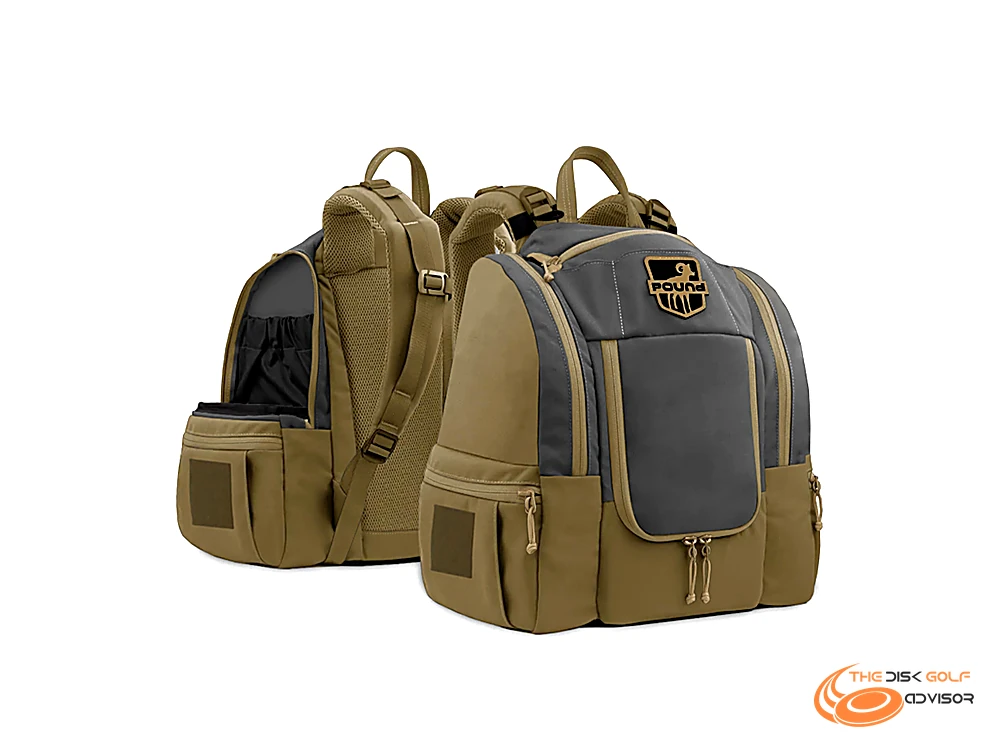
Pound Disc Golf operates out of Oregon, hand-sewing backpacks that sit at the absolute pinnacle of outdoor gear design. Founded by outdoor pack designer Levi Erickson, Pound applies mountaineering suspension principles to the sport of disc golf. The Octothorpe serves as the full-sized tournament model, while the Rufus provides a slightly more compact, agile footprint.
Holding a Pound pack reveals craftsmanship absent in mass-market imports. The shell is stitched from military-spec 1000D and 500D Cordura nylon. Stress points are bar-tacked, and seams are bound with precision webbing. The pack avoids rigid plastic internal inserts; instead, it utilizes a proprietary structural foam core that contours directly to your thoracic and lumbar spine.
On the course carrying 24 discs and two full water bottles, the weight distribution is remarkable. Where traditional bags pull backward away from the shoulders, creating neck fatigue by hole 12, the Pound pack pulls the center of gravity tight against your shoulder blades. The load rides on your hips through an integrated lumbar pad made of non-compressing closed-cell foam.
The side pockets are engineered with elastic internal gussets that accommodate rain jackets, extra towels, and snacks without bulging into the main disc compartment. Discs slide in and out of the main pocket with zero friction, even when the bag is filled to maximum capacity.
Tested at McNaughton & Bradley Park
The first time I strapped on an Octothorpe for a 36-hole tournament marathon at Bradley Park, the difference was immediate. Traditional bags hang backward away from your shoulders like a sack of bricks, pulling on your neck. The Pound hugs your thoracic spine and transfers the 17-pound load directly onto your hip belt via a dense closed-cell lumbar pad that never compresses flat. During a muddy round at McNaughton, I took an accidental four-foot slide down a wet shale bank on Hole 11. The pack took the full brunt of the gravel scrape: I wiped the Illinois clay off with a wet towel and could not find a single torn stitch. After four hard seasons of Midwest weather, the suspension still has zero lumbar sag.
- Handmade in the USA with unmatched stitch tolerances
- Mountaineering suspension contours snugly to the spine
- Genuine lifetime warranty covers repairs for life
- Ultra-durable military-spec Cordura sheds rock gouges
- Substantial price point ($349-$449)
- Soft structural base requires care on wet muddy hills
- Custom drops frequently sell out rapidly
Order Direct from Pound Disc Golf →
Handcrafted in Oregon. You can also check luxury bag availability on Amazon.
2. GRIPeq AX6: The Tournament Touring Workhorse
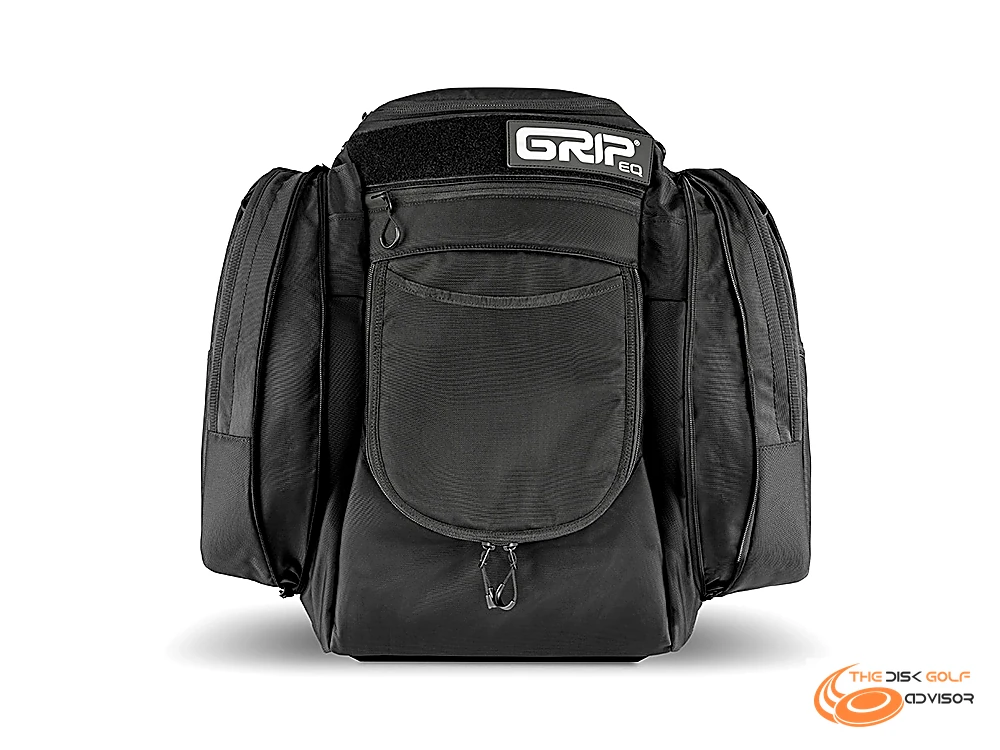
For competitive touring pros, GRIPeq has represented the gold standard of structural reliability for over a decade. The AX6 is their flagship maximum-capacity carrier, refined with an expanded quiver capacity, reinforced composite skeleton, and rugged all-weather hardware.
The AX6 is built like an expedition trunk. Its outer shell utilizes high-tenacity 840D nylon that sheds briars, thistle, and thorns without fraying. What sets the AX6 apart is its rigid internal structure. A composite skeleton runs through the back panel, sides, and bottom, creating an upright enclosure that never sags, regardless of whether you are carrying 10 discs or 28 discs.
Underneath the bag sit two massive, full-length molded polyethylene skid rails. When you drop this bag down on wet grass, gravel, or muddy Illinois clay at McNaughton Park, the fabric base remains elevated a full half-inch above the wet ground. The rails also act as structural stabilizers on hillside lies, gripping into the dirt rather than sliding downhill.
Disc access is smooth and spacious:
- Main Compartment: Easily holds 22 to 24 drivers and midranges with an adjustable internal divider.
- Top Quiver Pocket: Holds 4 putters with an adjustable height pull-tab that allows you to configure how high your putters sit for rapid grabbing.
- Side Storage: Expandable zippered side pockets expand outward, accommodating light hoodies, towels, lunch, and rangefinders without squeezing disc storage.
- Dedicated Sleeves: Features reinforced side sleeves engineered specifically to lock down large golf umbrellas and telescopic retriever poles with secure hook-and-loop anchors.
Tested During Summer Doubles & Glow League
I took the Rogue Iron V3 out for a Friday night doubles round at Bradley Park in late July when the heat index was hovering around 92 degrees. I loaded the top cooler with six cold 12-ounce beverage cans and a reusable gel ice pack at 4:30 PM. Over three and a half hours of play across 24 holes, not a single droplet of moisture or condensation seeped through the welded foil liner into the 14-disc compartment below. My towel and baseline putters remained completely dry. One handling caveat to respect: six cans plus ice add roughly 5.5 pounds directly to the upper deck of the chassis. On steep uphill approaches, that elevated center of gravity makes the pack want to tilt backwards if you do not lean into your stride. Keep your heaviest hydration bottles on the bottom flanks to counterbalance that top deck weight.
- Dual polyethylene skid rails keep base elevated off mud
- Rigid composite frame never collapses or slumps
- Dedicated locking sleeves for umbrellas and retrievers
- Tested to survive 5 to 7 intense tournament seasons
- Heavier empty chassis weight (4.8 lbs)
- Shoulder strap foam is firm and requires a 15-round break-in period
Order Direct from GRIPeq →
Official touring model. You can also check GRIPeq availability on Amazon.
3. Squatch The Legend 3.0: High-Capacity Ergonomic Perfection
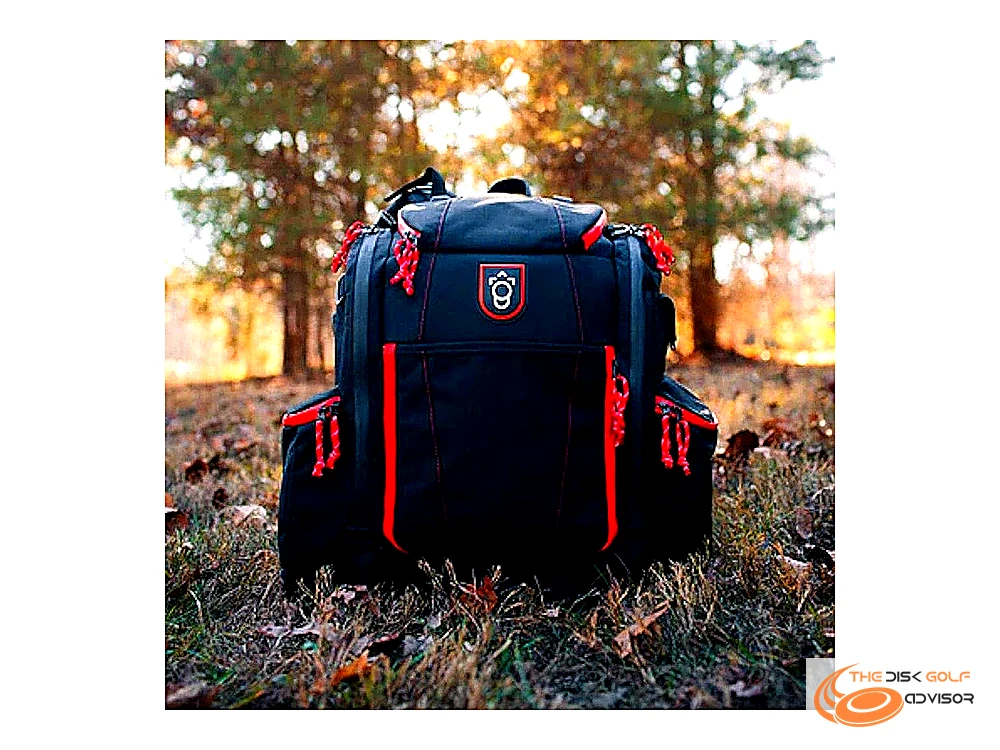
Squatch burst onto the pro tour scene through a design collaboration with Pound Disc Golf, engineering a pack that combines the soft, body-contouring suspension of high-end mountaineering packs with mass-production accessibility. The Legend 3.0 is the touring model carried by top touring pros like Ezra Aderhold.
The Legend 3.0 is built from genuine 1000D Cordura nylon, making it virtually tear-proof against thorny rough and rock scrapes. Weighing just 3.9 pounds empty, it is nearly a full pound lighter than the GRIPeq AX6 while offering equal or greater storage volume.
The shoulder harness features thick, plush, breathable mesh straps backed by an articulating chest strap that slides vertically along nylon piping. When you swing the Legend onto your back, the weight hugs your spine snugly. The lumbar support pad uses memory foam that molds to your lower back, preventing the bruising and hot spots that stiff bags cause during 36-hole tournament weekends.
Storage highlights include:
- A cavernous main compartment holding 20 to 24 discs cleanly.
- A top putter pocket holding 4 to 5 putters with a magnetic flap closure that snaps open and shut silently without noisy Velcro.
- A slide-in, removable insulated cooler insert that fits into one of the giant side pockets, keeping 4 cold cans chilled throughout your round.
- Dedicated cell phone pocket lined with microfiber to prevent screen scratches.
Tested During 94°F July Summer League
Carrying The Legend 3.0 during a humid 94-degree July league round in Peoria made me appreciate the weight difference immediately. At 3.9 pounds empty, it feels noticeably lighter on hole 16 than my AX6. My favorite on-course detail happened on a tense green during our local cash match. A cardmate was addressing a 35-foot birdie putt; I reached down and snapped the putter flap shut. In traditional bags, ripping Velcro open on a quiet green sounds like tearing sheet metal and will earn you dirty looks from your card. The Squatch magnets snap shut in complete silence. And that slide-in cooler? Packing four chilled cans of cold brew and an ice pack saved my focus during an hour-long thunderstorm backup.
- Noticeably lighter empty weight (3.9 lbs) saves back strain
- Genuine 1000D Cordura nylon construction
- Silent magnetic pocket flap closures
- Included slide-in 4-can insulated cooler insert
- Flat fabric base sits directly on turf (requires wipe-down after wet rounds)
- Slightly less rigid than the AX6 on steep sidehill lies
4. Prodigy BP-1 V3: The High-Capacity Value King
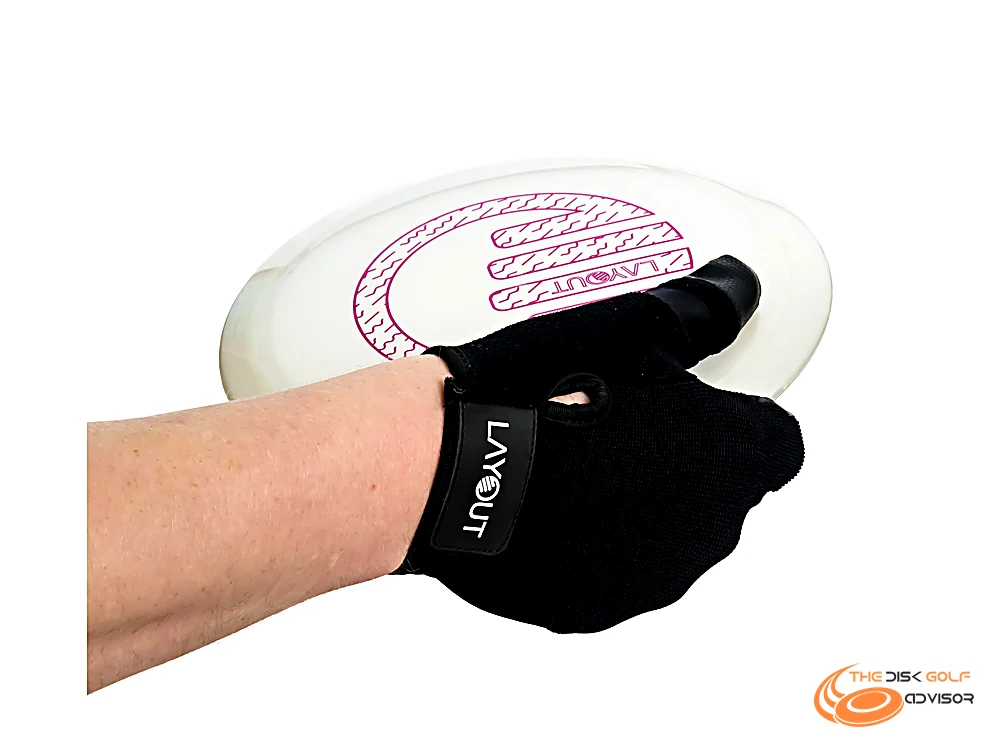
If you need to carry 26 or more discs alongside full tournament rain gear but cannot justify spending over $200, the Prodigy BP-1 V3 is the uncontested value king of the disc golf market.
Priced around $125, the BP-1 V3 offers storage volume that rivals bags twice its price. The outer body is crafted from high-density tear-resistant ripstop nylon, protected by water-resistant taped zippers with ergonomic paracord pulls.
What makes the BP-1 V3 special is its cavernous interior:
- The main disc compartment swallows 22 to 24 discs with room to spare.
- The top putter pocket holds 4 putters comfortably.
- A front quick-draw pocket holds two additional approach discs.
- Deep side compartments run the entire vertical length of the bag, expanding outward via zippered gussets to hold bulky winter coats, shoes, or multiple towels.
- Dual 32-ounce insulated bottle holders with elastic cinches keep water bottles from bouncing out.
Prodigy addressed early stability complaints by reinforcing the V3 with removable structural side panels and thick bottom skid feet. On flat and mild terrain, the bag stands firm and upright without slumping forward.
Tested in March Cold Wind & Rain
Assembly warning: putting the BP-1 V3 together on your living room floor will test your patience. Sliding those rigid plastic side inserts into the tight internal sleeves requires serious thumb muscle and a few scraped knuckles. But once locked in place, the structure transforms into an absolute vault. I loaded 28 discs, a lightweight windbreaker, a rangefinder, and two 32-ounce insulated flasks into this bag for a brisk March tournament. It held everything without bulging. The shoulder straps are noticeably thinner than what you get on a $250 GRIPeq or Squatch, so by hole 30 you will definitely feel the 18-pound load across your traps, but for $125, no other bag on the market carries this much gear with this level of ripstop weatherproofing.
- Incredible storage capacity matching $250 tour packs
- Massive expandable side pockets fit heavy winter jackets
- Reinforced bottom feet and internal rigid side panels
- Under $130 retail price point
- Internal plastic panels require stiff manual assembly out of the box
- Shoulder strap foam is slightly thinner under full 18-pound loads
5. MVP Voyager Lite: The Ideal Mid-Tier Workhorse
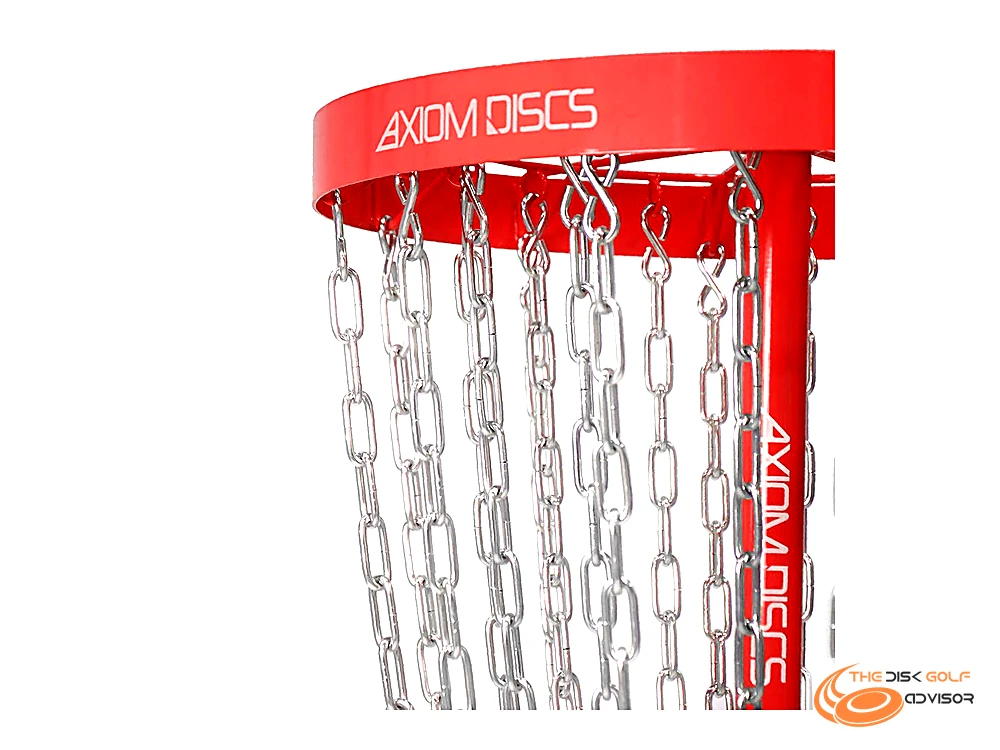
The MVP Voyager Lite represents the sweet spot for the vast majority of weekend league players. It trims away excess bulk and heavy side pockets while preserving an upright, structured frame that holds 20 to 22 discs cleanly.
Constructed from rugged 900D coated polyester, the Voyager Lite weighs only 3.4 pounds empty. MVP engineered this bag with a distinctly upright, squared-off base. Unlike budget bags that sag inward into an oval shape, the Voyager Lite maintains a rigid box shape thanks to interior structural inserts and wide plastic bottom rails.
The bag features a smart, uncluttered layout:
- The main bay holds 18 to 20 drivers and midranges with easy thumb clearance.
- The top putter compartment holds 2 to 3 putters and features a clean roll-away flap.
- Dual 32-ounce insulated bottle holders fit standard wide-mouth Nalgene bottles.
- Medium side pockets provide ample space for keys, wallet, phone, mini marker, and a couple of microfiber towels.
On the back, the Voyager Lite provides generous lumbar and shoulder padding with wide air-mesh channels that promote airflow during hot July rounds. Because the pack is compact and narrow, it does not bump against your elbows or restrict your stride as you hike up steep hills.
Tested on Daily 18-Hole Evening Rounds
The Voyager Lite is the bag I keep loaded in my trunk for quick 18-hole evening league rounds after work. What I love about it is the squared-off geometry. Most mid-tier bags slump into a sagging teardrop shape in your backseat, dumping discs under the pedals. The Voyager Lite sits completely upright on its base rails. On the fairway, pulling high-speed drivers out of the main compartment is fast and clean because MVP gave the opening generous thumb clearance. The only compromise is gear capacity: if the forecast calls for sudden temperature drops, you can stuff a lightweight windbreaker in the side pocket, but you will not have room for a bulky winter hoodie and a second pair of shoes.
- Rigid upright box chassis prevents slumping
- Lightweight 3.4 lb build reduces fatigue over 18 holes
- Wide polymer bottom runner rails protect against mud
- Dual insulated 32 oz drink sleeves
- Modest side storage for bulky jackets or heavy gear
- Putter pocket fits 3 putters max
6. Dynamic Discs Trooper: The Unbeatable Budget Starter
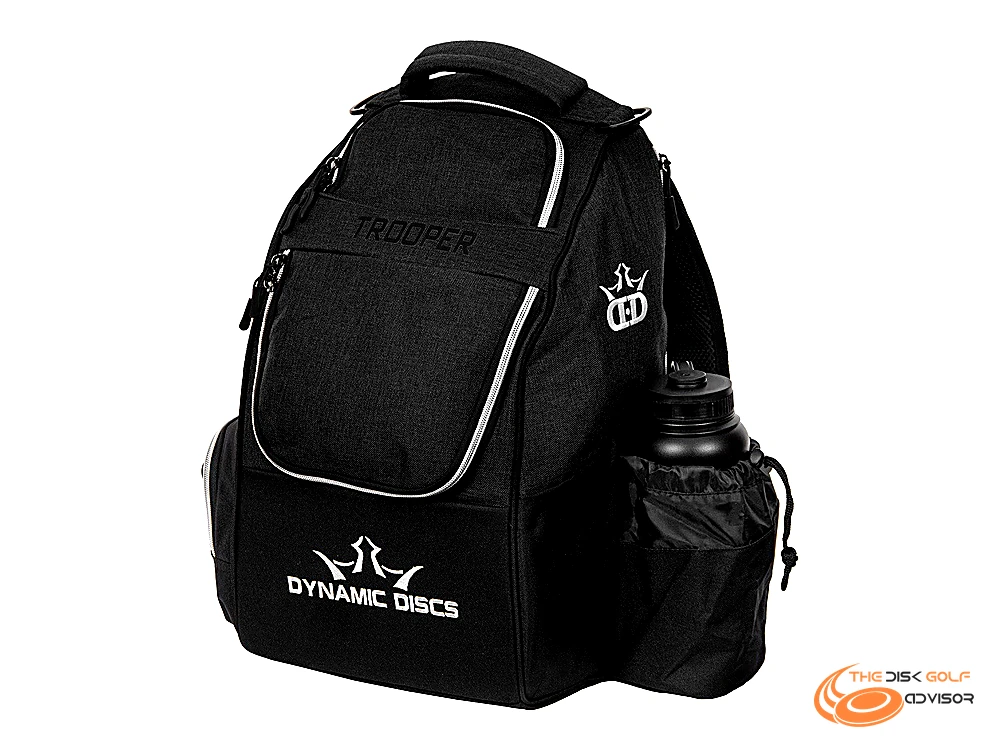
The Dynamic Discs Trooper is the undisputed starter backpack of the modern era. For $40 to $45, it rescues new players from awkward single-strap shoulder bags and brings them into the world of hands-free backpack ergonomics.
The Trooper keeps things simple and efficient. Molded from 600D polyurethane-coated polyester, it weighs just 2.1 pounds empty. It features a teardrop silhouette that sits high and tight on the upper back, reducing torque on the lower spine.
Despite its compact profile, storage is surprisingly generous:
- The main lower compartment holds 18 discs with ease.
- The upper pocket holds up to 4 putters or acts as a catch-all for a windbreaker, snacks, and keys.
- A single cinch-cord water bottle pocket on the right side holds a 32-ounce bottle securely.
- Small zippered side pockets store minis, scorecards, and cell phones.
Tested with Local Peoria Club Beginners
I have gifted at least six Troopers to newer players in our local Peoria club, and it remains the best first step away from awkward single-strap shoulder bags. At barely over two pounds, it carries like a school backpack and sits high on your upper shoulders. But here is the critical field lesson every Trooper owner learns the hard way: never load four heavy putters into the top pocket while setting the bag down facing downhill. On Hole 6 at Bradley Park, I watched a buddy’s Trooper faceplant straight into a puddle because the top-heavy putter weight pulled the frameless front fabric over. Always set this bag down parallel to the slope or lean it against the basket pole on uneven lies.
- Exceptional under $45 price point for genuine backpack carry
- Extremely lightweight (2.1 lbs empty)
- Generous 18-22 total disc capacity
- Padded back and shoulder straps reduce fatigue
- Frameless soft fabric base easily tips forward on hills
- 600D polyester will wear through over 2-3 seasons of concrete teepad drops
- Single water bottle pocket
7. Rogue Iron V3 Cooler Bag: The Ultimate Hybrid Weekender
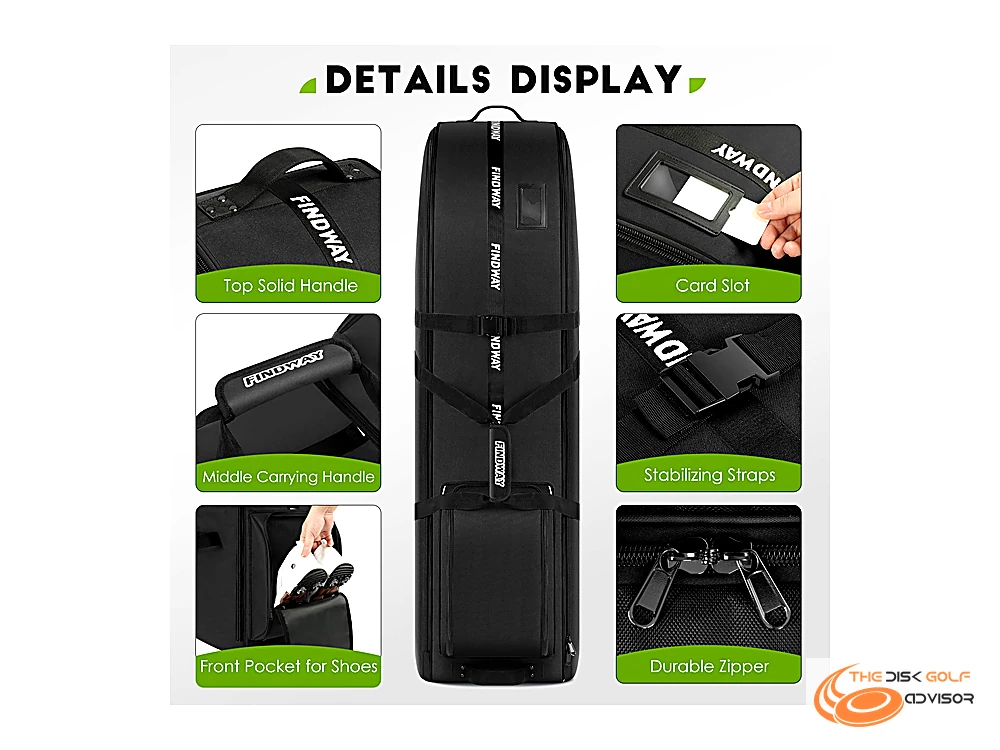
Not every round of disc golf is a sanctioned PDGA B-tier tournament. For Saturday afternoon casual rounds with friends, staying hydrated with cold drinks is just as important as carrying backup drivers. The Rogue Iron V3 Cooler Bag was built specifically for this lifestyle.
The standout feature is the dedicated, seam-sealed insulated cooler compartment built directly into the upper deck of the bag. Lined with thick thermal insulation and waterproof foil, it holds six 12-ounce cans along with an ice pack, keeping beverages ice-cold for four hours in summer heat without leaking condensation into the lower disc compartment.
Below the cooler sits an open-access lower disc bay holding 12 to 14 discs: plenty of capacity for putters, straight midranges, and trusted fairways. If you choose not to carry drinks, the cooler compartment converts into an expansive secondary disc quiver, expanding total capacity to 22 discs.
Additional utility touches include:
- Heavy-duty 900D water-resistant polyester construction.
- Reinforced rubberized skid feet that keep the bottom fabric out of wet grass.
- Dual 32-ounce bottle holders, meaning you can carry water on the outside while keeping cans cold inside.
- Dedicated velcro loop strap on the side for carrying a compact stool or umbrella.
Tested Across 5 Midwest Tournament Seasons
I have carried GRIPeq bags through more Midwestern sleet, summer humidity, and muddy creek crossings than any other carrier. What makes the AX6 my go-to tournament tank is those dual polyethylene runner rails on the base. On Hole 3 at McNaughton, where the hillside drops toward the ravine at a 20-degree angle, you can literally stomp this bag into the turf and those rails bite like golf cleats. The fabric stays elevated half an inch above standing mud puddles. Word of warning from someone who has broken in three GRIP packs: the shoulder straps are stiff right out of the box. Expect roughly fifteen rounds of play before the dense closed-cell foam softens and contours to your collarbones. Once broken in, it is practically indestructible.
- Seam-sealed thermal cooler holds 6 cold cans with zero condensation leaks
- Converts to 22-disc capacity when not carrying beverages
- Dual external 32 oz drink holders plus stool strap
- Reinforced rubberized bottom skid feet
- Loaded cooler adds ~5 lbs to upper deck, raising center of gravity
- Requires careful positioning on steep downhill slopes
The Hill-Stability and Tip-Over Test
Every experienced disc golfer knows the frustration of setting a bag down on an elevated teepad or steep hillside, only to watch it pitch forward and roll down the slope, scattering plastic across the rough.
To evaluate base stability objectively, we took each bag to a measured 20-degree grassy hillside at McNaughton Park. Each pack was loaded with 20 discs and two full 32-ounce water bottles, then set down facing across the slope and directly down the slope.
| Bag Model | Stability Score | Primary Base Mechanism | Physical Incline Behavior |
|---|---|---|---|
| GRIPeq AX6 | 10 / 10 (Rock Solid) | Dual raised polyethylene rails | Rails bite into turf like cleats; zero forward pitch on 20° incline. |
| Prodigy BP-1 V3 | 8.5 / 10 (Solid) | Molded corner feet + internal panels | Internal side panels prevent frame collapse; stands firm on moderate slopes. |
| MVP Voyager Lite | 8.5 / 10 (Solid) | Wide polymer runner bars | Rigid squared base maintains box structure without slumping. |
| Pound Rufus / Octothorpe | 8.0 / 10 (Good) | Wide footprint structural foam core | Wide surface area grips grass; conforms slightly to uneven terrain. |
| Squatch The Legend 3.0 | 7.5 / 10 (Fair) | Flat base with rubber skid plate | Remains stable across slopes; needs gentle placement on steep descents. |
| Rogue Iron V3 Cooler Bag | 7.0 / 10 (Fair) | Rubber skid feet (top-heavy) | Drinks in top deck raise center of gravity; face-plants if pitched downhill. |
| Dynamic Discs Trooper | 4.5 / 10 (Frequent Tip) | Frameless soft fabric base | Soft front fabric sags under putter weight; tips forward easily on 15° slopes. |
What Prevents Bag Tip-Overs
- Raised Polyethylene Rails: The dual runner rails on the GRIPeq AX6 act like cleats on turf. They bite into sloping grass, preventing the base from rotating downward.
- Internal Framework Rigidity: The Prodigy BP-1 V3 and MVP Voyager Lite use vertical side inserts that prevent the sidewalls from collapsing forward when discs slide downhill.
- The Soft-Base Flaw: Bags like the Dynamic Discs Trooper lack internal stiffeners. When loaded with putters in the top pocket, the top weight pulls the front fabric down, causing the bag to faceplant on anything steeper than a 10-degree incline.
Whenever you are setting your bag down on slopes steeper than fifteen degrees, like the fairway drop-offs on Hole 7 at McNaughton Park, never park the bag facing downhill. Always rotate the bag perpendicular to the fall line with the shoulder harness facing uphill. This positions the heavier side pockets into the hill slope and prevents the front putter pocket from levering the chassis forward into a catastrophic tumble down the ridge.
Ergonomics, Load Distribution, and Lower Back Health
A standard tournament loadout: 22 discs (approx. 8.5 lbs), two 32-ounce drinks (4.2 lbs), bag chassis (4 lbs), and retriever/towels (1.5 lbs): weighs roughly 18.2 pounds. Over a two-round, 36-hole tournament day, a player lifts and sets down that weight approximately 140 times while walking over five miles.
Carrying that load on cheap, poorly designed shoulder straps creates severe trapezius strain and compresses the lumbar vertebrae, leading to fatigue that directly impairs your putting stroke on the back nine.
Cheap open-cell foam compresses flat like a pancake within fifteen minutes of wear. Look for closed-cell EVA or cross-linked polyethylene foam that retains its thickness under load.
Found on the Pound Octothorpe and GRIPeq AX6, these straps run from the shoulder harness to the bag top. Cinching them transfers weight off shoulders directly onto the hips.
A sliding chest strap prevents shoulder pads from slipping outward off collarbones, stabilizing the pack as you navigate slippery creek beds and muddy hillsides.
Segmented lumbar pads leave a vertical channel down the center of your spine, allowing airflow to evaporate sweat and prevent damp friction against your lower back.
Materials, Zippers, and Weatherproofing: How to Spot Quality
Manufacturer spec sheets often hide cheap materials behind marketing jargon. Here is how to evaluate fabric and hardware:
Fabric Denier: 600D vs. 1000D Cordura
- 600D Polyester (Entry Bags): Standard lightweight polyester with a polyurethane backing. It resists light rain but frays when scraped against thorns, rocks, and briars. Expected lifespan: 1 to 2 years.
- 840D Ripstop Nylon (Mid & Touring Bags): Utilizes an interlocking cross-hatch weave that stops tears from expanding if punctured by barbed wire or sharp branches. Found on the GRIPeq AX6 and Prodigy BP-1. Expected lifespan: 4 to 6 years.
- 1000D Genuine Cordura (Luxury Bags): Air-textured nylon yarn with exceptional abrasion resistance. It withstands drag tests over gravel and asphalt without tearing. Used by Pound and Squatch. Expected lifespan: 8 to 15+ years.
The Zipper Check
Zippers are the most common mechanical failure point on disc golf backpacks:
- Look for YKK brand zippers with taped polyurethane water-resistant coatings.
- Avoid fine-toothed nylon coil zippers on putter pockets. When putters are pulled out rapidly, lateral tension pulls the teeth out of alignment, causing the zipper to split open.
- Oversized #10 or #8 zippers with thick teeth shrug off sand, mud, and river grit without binding.
After playing riverside courses like Pekin or Peoria along the Illinois River valley, fine silica sand and dried river mud work their way into zipper coil tracks. If you force a jammed zipper pull, you will strip the slider teeth permanently. Keep a soft nylon bristle brush in your utility pocket to sweep the tracks clear, and apply natural beeswax or zipper lubricant every twenty rounds. A two-minute cleaning routine will double the operational lifespan of any disc golf pack.
Head-to-Head: GRIPeq AX6 vs. Squatch The Legend 3.0
The two most prominent premium bags on the professional tour represent two distinctly different design philosophies:
| Category / Feature | GRIPeq AX6 ($219) | Squatch The Legend 3.0 ($245) | The Verdict |
|---|---|---|---|
| Chassis Philosophy | Rigid composite armor trunk | Soft, flexible mountaineering pack | Personal preference |
| Shell Material | 840D High-Tenacity Nylon | 1000D Genuine Cordura Nylon | Squatch (Superior fabric grade) |
| Empty Weight | 4.8 lbs (Noticeably heavier) | 3.9 lbs (Nearly a pound lighter) | Squatch (Saves back fatigue) |
| Hillside Stability | Dual elevated runner rails | Flat rubberized base | GRIPeq (Unbeatable on hills) |
| Disc Capacity | 24-28 Discs | 24-28 Discs | Tie |
| Pocket Closures | Heavy-duty YKK zippers | Silent magnetic flaps + zippers | Squatch (Silent and fast access) |
| Mud & Water Defense | Base stays 0.5″ off wet mud | Fabric base sits on ground | GRIPeq (Cleaner in wet conditions) |
| Cooler Capability | Side pocket accommodates cans | Slide-in removable 4-can cooler | Squatch (Dedicated cooler included) |
The Field Verdict: Choose the GRIPeq AX6 if you regularly play rocky, muddy, or heavily wooded courses with steep elevation changes. Its rigid skeleton and raised base rails keep your equipment completely clean and stable on rugged terrain. Choose the Squatch The Legend 3.0 if your primary priority is back comfort, lighter weight, and modern convenience. The Pound-inspired shoulder suspension, magnetic closures, and included cooler make it the most comfortable touring pack to carry for 36 continuous holes.
Practical Questions from the Fairway (FAQ)
Click on any question below to expand the full answer:
01
What disc golf bags do top touring pros carry?
What disc golf bags do top touring pros carry?
Top touring professionals on the Disc Golf Pro Tour carry three dominant brands: Pound Disc Golf (Octothorpe and Rufus), GRIPeq (AX-Series and BX-Series), and Squatch (The Legend 3.0). Pros select these bags for their 1000D Cordura durability, internal frame stability that prevents tip-overs on steep tour fairways, and dense lumbar padding that reduces muscular fatigue across grueling 4-day tournaments.
02
What bag setup does Paul McBeth use on tour?
What bag setup does Paul McBeth use on tour?
Six-time PDGA World Champion Paul McBeth throws out of his signature GRIPeq BX3 and AX-Series tour bags. Built to McBeth’s exact specifications, these bags feature reinforced internal side panels, an expandable 22-to-26 disc capacity, dual umbrella sleeves, and custom McBeth aesthetic badging.
03
Which disc golf bag does Ezra Aderhold carry?
Which disc golf bag does Ezra Aderhold carry?
Powerhouse touring pro Ezra Aderhold is sponsored by Squatch Disc Golf and carries The Legend 3.0. Aderhold relies on the bag’s lightweight Cordura construction, custom slide-in cooler compartment for on-course nutrition, and ergonomic shoulder suspension designed in collaboration with Pound.
04
How many discs should a player carry based on skill level?
How many discs should a player carry based on skill level?
A casual or recreational player needs a bag holding 12 to 16 discs (a balanced mix of putters, straight midranges, and control fairways). Tournament and serious league competitors carry 20 to 26 discs to accommodate duplicate backup molds in varying stages of wear, utility scramble discs for severe wind and doglegs, plus essential rain gear, hydration, and towels.
05
How do you properly wash and maintain a premium disc golf bag?
How do you properly wash and maintain a premium disc golf bag?
Never submerge a high-end disc golf backpack in a washing machine; the spin cycle destroys internal plastic stiffeners and strips waterproof polyurethane coatings. Follow this simple protocol:
- Empty all pockets and shake out dirt and pine needles.
- Mix lukewarm water with a small amount of Dawn dish soap.
- Use a soft nylon bristle brush to scrub mud off bottom rails and Cordura fabric.
- Rinse thoroughly with a garden hose on gentle spray.
- Hang upside down in a shaded, well-ventilated garage or porch to air dry completely before refilling with discs.
06
What causes disc golf bags to tip over on hillsides?
What causes disc golf bags to tip over on hillsides?
Bags tip over due to three factors: lack of rigid base runners or cleats, high centers of gravity from overloaded top putter pockets, and frameless sidewalls that collapse when discs shift downhill. Premium bags solve this using elevated polyethylene runner rails (like GRIPeq) or rigid internal composite frames that stay upright on steep slopes.
Final Verdict and Essential Tournament Bag Packing List
Investing in the best disc golf bags comes down to your playing volume, course terrain, and budget:
- For absolute luxury, handmade USA quality, and lifetime comfort: Buy the Pound Rufus or Octothorpe ($349-$449).
- For rugged tournament reliability that stands tall on muddy hills: Buy the GRIPeq AX6 ($219).
- For the best balance of plush comfort, lightweight carry, and cooler utility: Buy the Squatch The Legend 3.0 ($245).
- For maximum disc capacity on a sensible budget: Buy the Prodigy BP-1 V3 ($125).
- For casual weekend rounds and starting out right: Buy the Dynamic Discs Trooper ($44).
The Essential Tournament Bag Packing List
Before heading out for your next competitive round, make sure your bag includes these non-disc essentials:
- Telescopic Disc Retriever: A 14-to-18-foot pole pays for itself after recovering your first two premium drivers from water hazards.
- Three Microfiber Towels: One dedicated to wet mud, one for clean water wipe-downs, and one kept bone-dry inside a zip-top bag for putting grips.
- Climbing Chalk or Rosin Bag: Keeps finger pads dry during humid summer rounds and rainy autumn events.
- Permanent Marker & Mini Marker: Required for marking your lie and writing your contact information on discs under official PDGA tournament rules.
- Small First Aid & Tool Kit: Nail clippers (to smooth rough plastic rim gouges), athletic tape, bandages, and ibuprofen for joint inflammation.
Have a Question or Want Gear Tested?
I personally review every note from local and tournament players. If you want advice matching a bag to your specific cart setup or want us to test a new model on our Peoria testing grounds, email directly at diskgolfadvisior@gmail.com or head over to our Contact Page. Check out our Field Testing Philosophy and browse our full collection in the Bags & Carts Category. See you on the fairways!
.dga-article-content {
font-family: -apple-system, BlinkMacSystemFont, “Segoe UI”, Roboto, Oxygen, Ubuntu, Cantarell, sans-serif;
line-height: 1.75;
color: #1e293b;
max-width: 920px;
margin: 0 auto;
}
.dga-author-meta-box {
display: flex;
align-items: center;
gap: 16px;
background: #f8fafc;
border: 1px solid #e2e8f0;
padding: 16px 20px;
border-radius: 8px;
margin-bottom: 28px;
}
.dga-author-meta-avatar img {
width: 58px;
height: 58px;
border-radius: 50%;
object-fit: cover;
border: 2px solid #ff751f;
}
.dga-author-meta-text {
font-size: 0.92rem;
color: #475569;
line-height: 1.5;
}
.dga-author-meta-text strong {
color: #0f172a;
font-size: 1rem;
}
.dga-author-links {
display: block;
margin-top: 4px;
font-size: 0.85rem;
}
.dga-author-links a {
color: #ff751f;
text-decoration: underline;
text-underline-offset: 3px;
}
.dga-callout-box {
border-radius: 8px;
padding: 22px 24px;
margin: 28px 0;
}
.dga-prescription-box {
background: #fff8f3;
border: 1px solid #fed7aa;
border-radius: 8px;
}
.dga-box-badge {
display: inline-block;
background: #ff751f;
color: #ffffff;
font-size: 0.75rem;
font-weight: 700;
text-transform: uppercase;
letter-spacing: 0.05em;
padding: 3px 10px;
border-radius: 4px;
margin-bottom: 10px;
}
.dga-box-title {
color: #9a3412;
margin: 0 0 12px 0;
font-size: 1.25rem;
font-weight: 700;
}
.dga-prescription-list {
margin: 12px 0 16px 20px;
padding: 0;
}
.dga-prescription-list li {
margin-bottom: 8px;
color: #334155;
}
.dga-prescription-list a {
color: #ff751f;
font-weight: 600;
text-decoration: underline;
}
.dga-box-footer-note {
font-size: 0.9rem;
color: #64748b;
margin: 12px 0 0 0;
padding-top: 4px;
}
.dga-toc-box {
background: #f8fafc;
border: 1px solid #e2e8f0;
border-radius: 8px;
padding: 20px 24px;
margin: 28px 0;
}
.dga-toc-title {
margin: 0 0 12px 0;
font-size: 1.15rem;
color: #0f172a;
}
.dga-toc-list {
margin: 0 0 0 18px;
padding: 0;
}
.dga-toc-list li {
margin-bottom: 6px;
}
.dga-toc-list a {
color: #2563eb;
text-decoration: none;
}
.dga-toc-list a:hover {
text-decoration: underline;
}
.dga-testing-box {
background: #f1f5f9;
border: 1px solid #cbd5e1;
border-radius: 8px;
}
.dga-testing-box h4 {
margin: 0 0 10px 0;
color: #0f172a;
}
.dga-table-responsive {
overflow-x: auto;
margin: 24px 0;
border-radius: 8px;
border: 1px solid #e2e8f0;
}
.dga-custom-table {
width: 100%;
border-collapse: collapse;
font-size: 0.88rem;
text-align: left;
background: #ffffff;
}
.dga-custom-table th {
background: #0f172a;
color: #ffffff;
padding: 12px 14px;
font-weight: 600;
white-space: nowrap;
}
.dga-custom-table td {
padding: 12px 14px;
border-bottom: 1px solid #f1f5f9;
vertical-align: top;
}
.dga-custom-table tr:nth-child(even) td {
background: #f8fafc;
}
.dga-custom-table tr:hover td {
background: #f1f5f9;
}
.dga-numbered-list {
margin: 14px 0 20px 22px;
padding: 0;
}
.dga-numbered-list li {
margin-bottom: 10px;
}
.dga-product-card {
background: #ffffff;
border: 1px solid #e2e8f0;
border-radius: 12px;
padding: 24px;
margin: 32px 0;
box-shadow: 0 2px 8px rgba(0, 0, 0, 0.04);
}
.dga-product-header {
margin-bottom: 16px;
}
.dga-product-rank {
display: inline-block;
background: #0f172a;
color: #ff751f;
font-size: 0.78rem;
font-weight: 700;
text-transform: uppercase;
padding: 3px 10px;
border-radius: 4px;
margin-bottom: 8px;
}
.dga-product-name {
margin: 0;
font-size: 1.35rem;
color: #0f172a;
line-height: 1.3;
}
.dga-product-media {
margin: 20px 0;
text-align: center;
}
.dga-product-figure {
margin: 0;
display: inline-block;
width: 100%;
}
.dga-product-img {
max-width: 100%;
height: auto;
border-radius: 8px;
border: 1px solid #f1f5f9;
}
.dga-product-figure figcaption {
font-size: 0.85rem;
color: #64748b;
margin-top: 8px;
font-style: italic;
}
.dga-specs-grid {
display: grid;
grid-template-columns: repeat(auto-fit, minmax(180px, 1fr));
gap: 12px;
background: #f8fafc;
border: 1px solid #e2e8f0;
border-radius: 8px;
padding: 14px;
margin: 18px 0;
}
.dga-spec-item {
display: flex;
flex-direction: column;
}
.dga-spec-label {
font-size: 0.75rem;
text-transform: uppercase;
color: #64748b;
font-weight: 600;
}
.dga-spec-val {
font-size: 0.95rem;
color: #0f172a;
font-weight: 700;
}
.dga-pros-cons-grid {
display: grid;
grid-template-columns: 1fr 1fr;
gap: 16px;
margin: 20px 0;
}
.dga-pro-col {
background: #f0fdf4;
border: 1px solid #bbf7d0;
border-radius: 8px;
padding: 16px 20px;
box-sizing: border-box;
}
.dga-pro-col strong {
color: #166534;
display: block;
margin-bottom: 8px;
font-size: 0.95rem;
}
.dga-pro-col ul {
margin: 0 0 0 18px;
padding: 0;
}
.dga-pro-col li {
font-size: 0.90rem;
color: #14532d;
margin-bottom: 6px;
line-height: 1.55;
}
.dga-con-col {
background: #fef2f2;
border: 1px solid #fecaca;
border-radius: 8px;
padding: 16px 20px;
box-sizing: border-box;
}
.dga-con-col strong {
color: #991b1b;
display: block;
margin-bottom: 8px;
font-size: 0.95rem;
}
.dga-con-col ul {
margin: 0 0 0 18px;
padding: 0;
}
.dga-con-col li {
font-size: 0.90rem;
color: #7f1d1d;
margin-bottom: 6px;
line-height: 1.55;
}
.dga-verdict-box {
background: #f8fafc;
border: 1px solid #e2e8f0;
padding: 14px 18px;
border-radius: 8px;
margin: 18px 0;
font-size: 0.95rem;
color: #1e293b;
}
.dga-cta-box {
margin-top: 22px;
text-align: center;
}
.dga-affiliate-btn {
display: inline-flex;
align-items: center;
justify-content: center;
gap: 8px;
background: #ff751f;
color: #ffffff !important;
font-size: 1rem;
font-weight: 700;
padding: 12px 28px;
border-radius: 8px;
text-decoration: none !important;
box-shadow: 0 4px 12px rgba(255, 117, 31, 0.28);
transition: all 0.2s ease;
}
.dga-affiliate-btn:hover {
background: #ea580c;
box-shadow: 0 6px 16px rgba(255, 117, 31, 0.36);
transform: translateY(-1px);
}
.dga-cta-subtext {
display: block;
font-size: 0.8rem;
color: #64748b;
margin-top: 8px;
}
.dga-cta-subtext a {
color: #ff751f;
text-decoration: underline;
}
.dga-bracket-grid {
display: grid;
grid-template-columns: repeat(auto-fit, minmax(220px, 1fr));
gap: 16px;
margin: 24px 0;
}
.dga-bracket-card {
background: #ffffff;
border: 1px solid #e2e8f0;
border-radius: 8px;
padding: 16px;
}
.dga-bracket-header {
font-weight: 700;
color: #0f172a;
font-size: 0.98rem;
margin-bottom: 8px;
border-bottom: 1px solid #f1f5f9;
padding-bottom: 6px;
}
.dga-bracket-card p {
font-size: 0.88rem;
color: #334155;
margin: 0;
line-height: 1.55;
}
.dga-faq-accordion {
display: flex;
flex-direction: column;
gap: 7px;
margin: 18px 0 28px 0;
width: 100%;
}
.dga-faq-item {
background: #ffffff;
border: 1px solid #e2e8f0;
border-radius: 7px;
overflow: hidden;
box-shadow: 0 1px 2px rgba(0, 0, 0, 0.02);
transition: border-color 0.2s ease, box-shadow 0.2s ease;
width: 100%;
box-sizing: border-box;
}
.dga-faq-item:hover {
border-color: #cbd5e1;
box-shadow: 0 2px 6px rgba(0, 0, 0, 0.04);
}
.dga-faq-item[open] {
border-color: #cbd5e1;
box-shadow: 0 2px 8px rgba(0, 0, 0, 0.05);
}
.dga-faq-trigger {
display: flex;
justify-content: space-between;
align-items: center;
padding: 9px 14px;
min-height: 40px;
cursor: pointer;
background: #ffffff;
list-style: none;
user-select: none;
gap: 10px;
transition: background 0.15s ease;
}
.dga-faq-trigger::-webkit-details-marker {
display: none;
}
.dga-faq-q-wrapper {
display: flex;
align-items: center;
gap: 10px;
flex: 1;
min-width: 0;
}
.dga-faq-q-badge {
display: inline-flex;
align-items: center;
justify-content: center;
background: #f1f5f9;
color: #475569;
font-family: ui-monospace, SFMono-Regular, monospace;
font-size: 0.72rem;
font-weight: 700;
padding: 2px 6px;
border-radius: 4px;
flex-shrink: 0;
letter-spacing: -0.02em;
}
.dga-faq-item[open] .dga-faq-q-badge {
background: #ff751f;
color: #ffffff;
}
.dga-faq-question {
font-size: 0.92rem;
font-weight: 600;
color: #0f172a;
line-height: 1.35;
}
.dga-faq-toggle-icon {
display: inline-flex;
align-items: center;
justify-content: center;
width: 22px;
height: 22px;
border-radius: 50%;
background: #f8fafc;
flex-shrink: 0;
color: #64748b;
transition: transform 0.25s ease, background 0.2s ease, color 0.2s ease;
}
.dga-faq-trigger:hover .dga-faq-toggle-icon {
background: #e2e8f0;
color: #0f172a;
}
.dga-faq-item[open] .dga-faq-toggle-icon {
transform: rotate(180deg);
background: #0f172a;
color: #ffffff;
}
.dga-faq-panel {
padding: 12px 16px 14px 16px;
background: #ffffff;
font-size: 0.90rem;
line-height: 1.6;
color: #334155;
}
.dga-faq-panel p {
margin: 0 0 8px 0;
}
.dga-faq-panel p:last-child {
margin-bottom: 0;
}
.dga-faq-panel ol {
margin: 6px 0 8px 18px;
padding: 0;
}
.dga-faq-panel li {
margin-bottom: 4px;
}
.dga-final-list {
margin: 14px 0 20px 20px;
padding: 0;
}
.dga-final-list li {
margin-bottom: 8px;
}
.dga-final-list a {
color: #ff751f;
text-decoration: underline;
}
.dga-blueprint-box {
background: #f8fafc;
border: 1px solid #e2e8f0;
border-radius: 8px;
}
.dga-blueprint-box h4 {
margin: 0 0 10px 0;
color: #0f172a;
}
.dga-blueprint-box ul {
margin: 0 0 0 18px;
padding: 0;
}
.dga-blueprint-box li {
margin-bottom: 6px;
color: #334155;
}
.dga-contact-signoff {
background: #000000 !important;
color: #ffffff !important;
border-radius: 12px;
padding: 26px 24px;
margin: 36px 0;
border: 1px solid #222222;
}
.dga-contact-signoff h3 {
color: #ffffff !important;
margin: 0 0 10px 0;
font-size: 1.2rem;
}
.dga-contact-signoff p {
color: #f1f5f9 !important;
margin: 0;
font-size: 0.92rem;
line-height: 1.65;
}
.dga-contact-signoff a {
color: #ff751f !important;
text-decoration: underline;
text-underline-offset: 3px;
font-weight: 600;
transition: color 0.2s ease;
}
.dga-contact-signoff a:hover {
color: #ea580c !important;
}
.dga-pro-experience-box {
background: #f8fafc;
border: 1px solid #e2e8f0;
border-radius: 8px;
padding: 16px 20px;
margin: 18px 0;
}
.dga-pro-experience-header {
display: flex;
justify-content: space-between;
align-items: center;
flex-wrap: wrap;
gap: 8px;
margin-bottom: 10px;
border-bottom: 1px solid #f1f5f9;
padding-bottom: 8px;
}
.dga-pro-badge {
font-size: 0.82rem;
font-weight: 700;
color: #ff751f;
text-transform: uppercase;
letter-spacing: 0.04em;
}
.dga-pro-course {
font-size: 0.78rem;
color: #64748b;
font-style: italic;
}
.dga-pro-experience-box p {
margin: 0;
font-size: 0.92rem;
line-height: 1.6;
color: #334155;
}
.dga-pro-tip-box {
background: #f8fafc;
border: 1px solid #e2e8f0;
border-radius: 8px;
padding: 16px 20px;
margin: 20px 0;
}
.dga-pro-tip-box strong {
color: #0f172a;
display: block;
margin-bottom: 6px;
font-size: 0.95rem;
}
.dga-pro-tip-box p {
margin: 0;
font-size: 0.90rem;
line-height: 1.6;
color: #334155;
}
@media (max-width: 680px) {
.dga-pros-cons-grid {
grid-template-columns: 1fr;
gap: 12px;
}
.dga-author-meta-box {
flex-direction: column;
text-align: center;
}
.dga-affiliate-btn {
width: 100%;
padding: 14px 18px;
}
.dga-faq-trigger {
padding: 8px 12px;
gap: 8px;
min-height: 38px;
}
.dga-faq-question {
font-size: 0.86rem;
}
.dga-faq-panel {
padding: 10px 12px 12px 12px;
font-size: 0.86rem;
}
}